
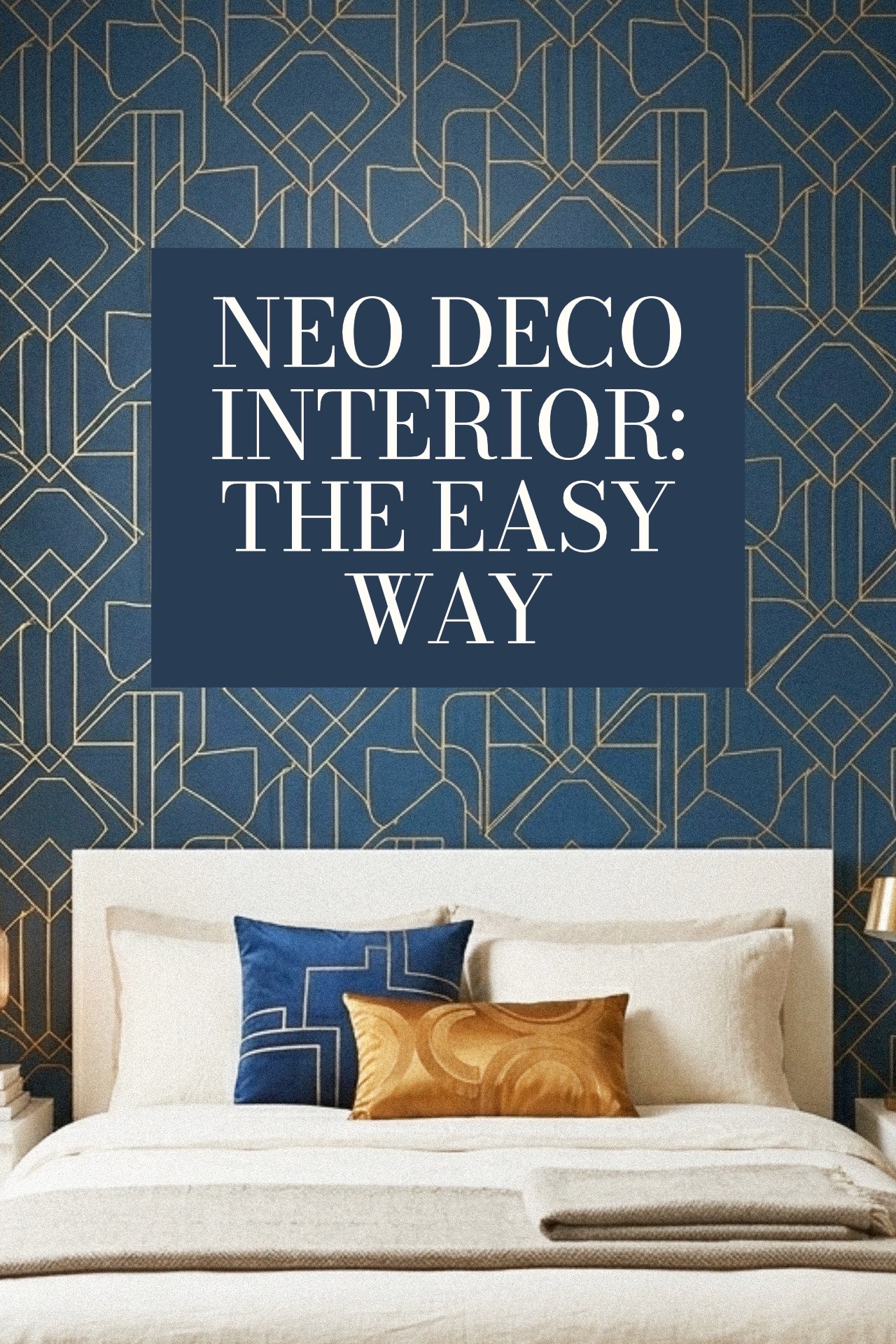
Inviting Neo Deco aesthetic to your home is simpler than you think. You do not need a full renovation to bring this understated elegance into your home. A few sensible, structured adjustments will do the work quite well.
When it comes to home interior, it is quite visible that people are getting a bit tired of this very cold minimalism of recent years. Living in a white box with one hard chair is perhaps not so cosy in the long run.
Nowadays, many people (including me) look for Neo Deco, which is a sensible and timely way to bring back the elegance of the 1920s art deco but without making your living room or bedroom look like a historic museum or a flashy hotel lobby.
Neo Deco aesthetic is about clean geometry, rich colours, and some dark wood or brass details. It gives a good weight to the room. People search for this because they want warmth and a bit of personality, but they still like things to be functional and organized, which is very understandable.
The good news for the wallet is that upgrading to Neo Deco does not mean you must do a full house remodelling. You do not need to throw out all your existing practical furniture. It is more about adding a few correct elements that change the mood.
Moving completely away from the Scandi simplicity and functionality is not a good idea. One should not throw the baby out with the bathwater, as the saying goes. The practical wooden furniture and clean lines do a lot of heavy lifting in a home, and I personally would never change that foundation.
The trick is to use the Scandinavian layout as the sensible base. It is a quiet background. Then you can add a few Neo Deco pieces, like a dark velvet cushion or a heavy brass lamp, to give some contrast. This creates a good balance without making the flat look too dramatic or difficult to clean.
And now we come to the core of this list: you can introduce Neo Deco style to your home or flat in a relatively easy way. Here are some proposals.
It is a sensible list you have made here. It shows that one does not need to spend all their savings to get this look. Let us look at the details and make them practical for the whole house.
Here is the expansion for the first point about wallpaper.
1. Put a Neo Deco wallpaper on a single feature wall
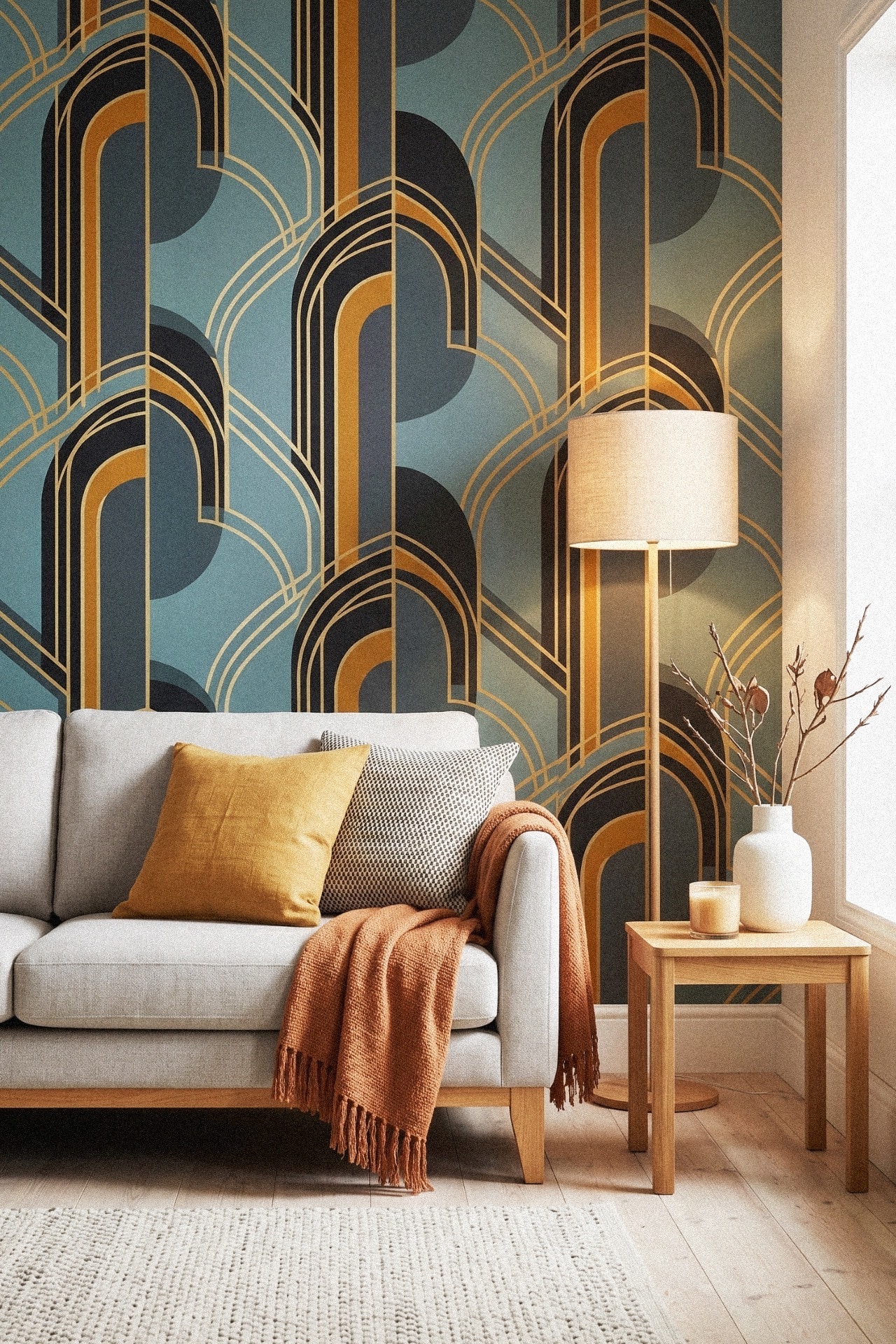
Using a bold Neo Deco style wallpaper is a good way to fix a boring wall.
In a hallway, which is often just a long line where people drop their shoes, a geometric pattern creates an immediate structure. It tells people that this is a proper home, not just a corridor. In the bedroom, placing this behind the bed gives a nice frame, so you do not need to buy a giant headboard. It is about being efficient with the space.
For the bathroom, you must be careful with the moisture, of course. But a feature wall behind the washbasin with arches or charcoal shapes makes the morning routine feel a bit more civilized. It takes the coldness away from the white tiles without making the room feel small or cluttered.
Ideas to explore:
- Place a terracotta geometric wallpaper behind the coat rack in the hallway.
- Use an ochre arched pattern on the wall behind the bathroom mirror.
- Cover the wall behind the headboard in the bedroom with a charcoal linear print.
2. Swap out standard hardware for geometric brass or bronze
This is what I call clever design. It is very satisfying because it requires only a screwdriver and a bit of patience.
In the kitchen, if you have standard white or grey doors from a large home decor retailer, adding brushed bronze pull bars changes the entire look. It makes the mass-produced cabinets look like custom architecture from an old European apartment.
Do not forget the interior doors of the house and the wardrobe in the bedroom. Standard aluminium handles can look a bit cheap and sad. By changing them to solid unlacquered brass with stepped edges, every time you open a door to go to sleep or get a coat, you feel the weight of good craftsmanship.
Ideas to explore:
- Replace the standard chrome handles on the bathroom vanity with matte black fluted pulls.
- Fix stepped unlacquered brass knobs onto the built-in wardrobe doors in the bedroom.
- Swap the kitchen cabinet hardware for brushed bronze pull bars with clean edges.
3. Introduce a single architectural statement mirror
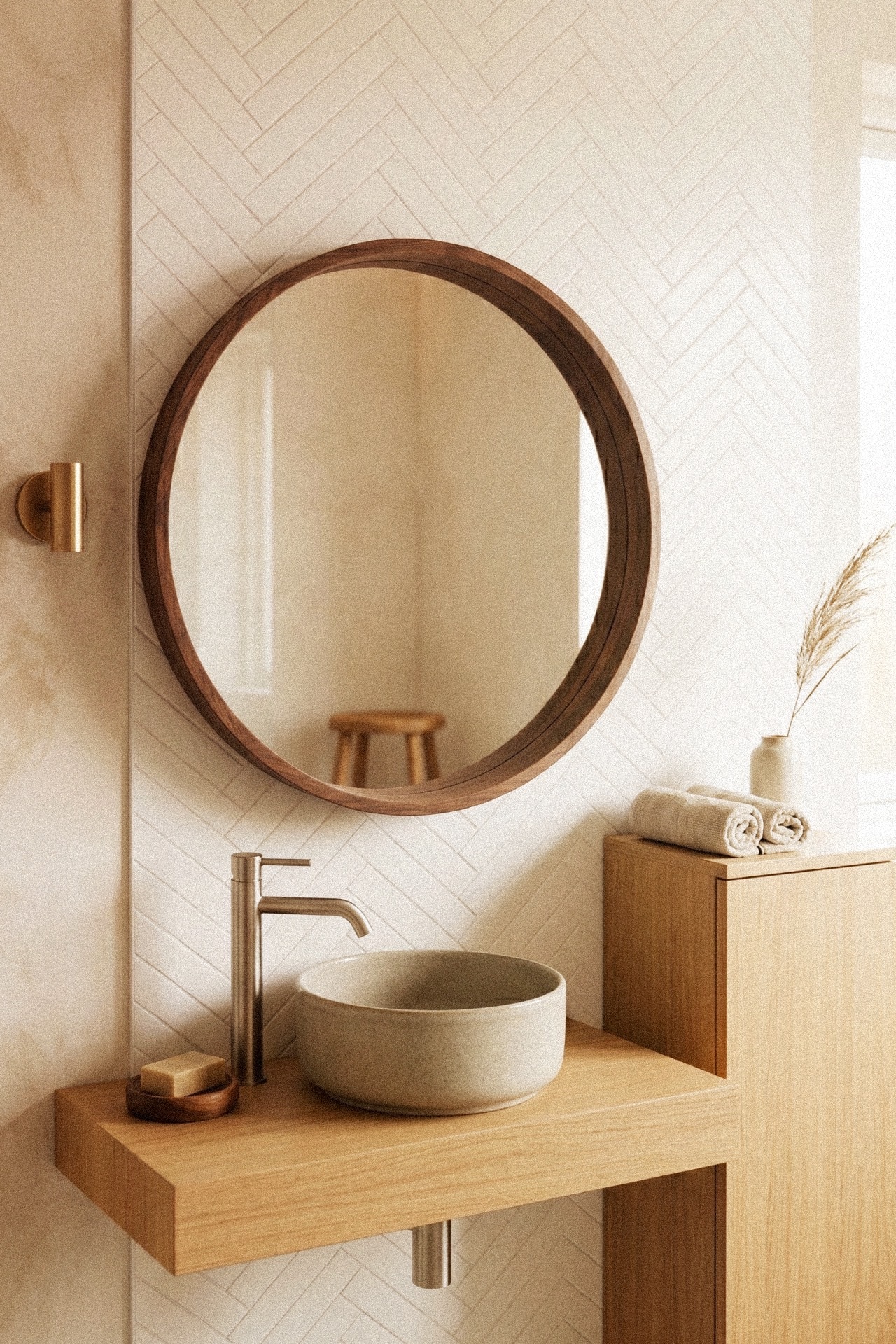
A mirror is a functional tool, but it can also act like a window that was not there before.
In a dark hallway, a large Neo Deco circular mirror with a thick walnut frame does two jobs. It lets you check your coat before leaving, and it catches the light from the living room door. It is a very logical solution for small entryways that feel a bit tight.
In the living room, placing a rectangular mirror with multi-layered corners above a simple sideboard gives a nice symmetry. It anchors the room. It is much better than hanging many small pictures, which often just looks messy and creates dust.
Ideas to explore:
- Hang a large circular mirror with a thick walnut frame opposite the hallway door.
- Place a rectangular mirror with stepped corners above the living room sideboard.
- Mount a slim, arched brass-framed mirror above the bathroom washbasin.
4. Frame your windows with high-contrast, linear curtains
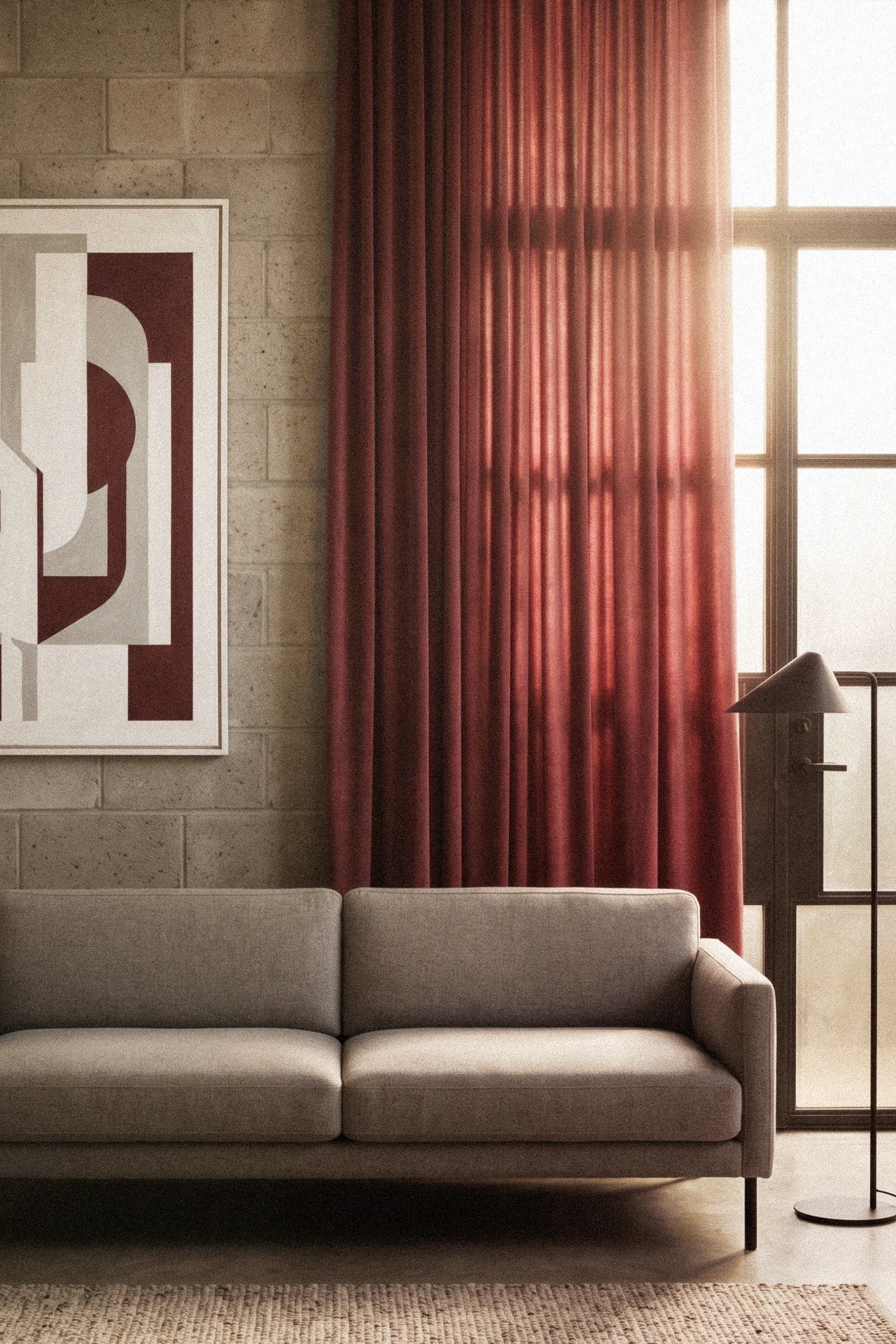
Windows are the eyes of the room, so we should frame them with some discipline. Many people use flimsy, thin curtains that just hang there without any purpose.
By using heavy structured linen or matte velvet in a dark olive or midnight navy, you create a clear border for the daylight. It makes the view outside look like a framed painting.
This works exceptionally well in the bedroom and the dining area. When you hang the curtains right from the ceiling line, the room feels taller. It is a simple optical trick that gives the space a serious weight. It is very comfortable for the eyes.
Ideas to explore:
- Hang midnight navy matte velvet curtains from the ceiling to the floor in the bedroom.
- Use structured linen curtains in dark olive to frame the dining room window.
- Install a heavy charcoal fabric blind with clean vertical lines in the home office.
5. Style your countertops with a single sculptural appliance
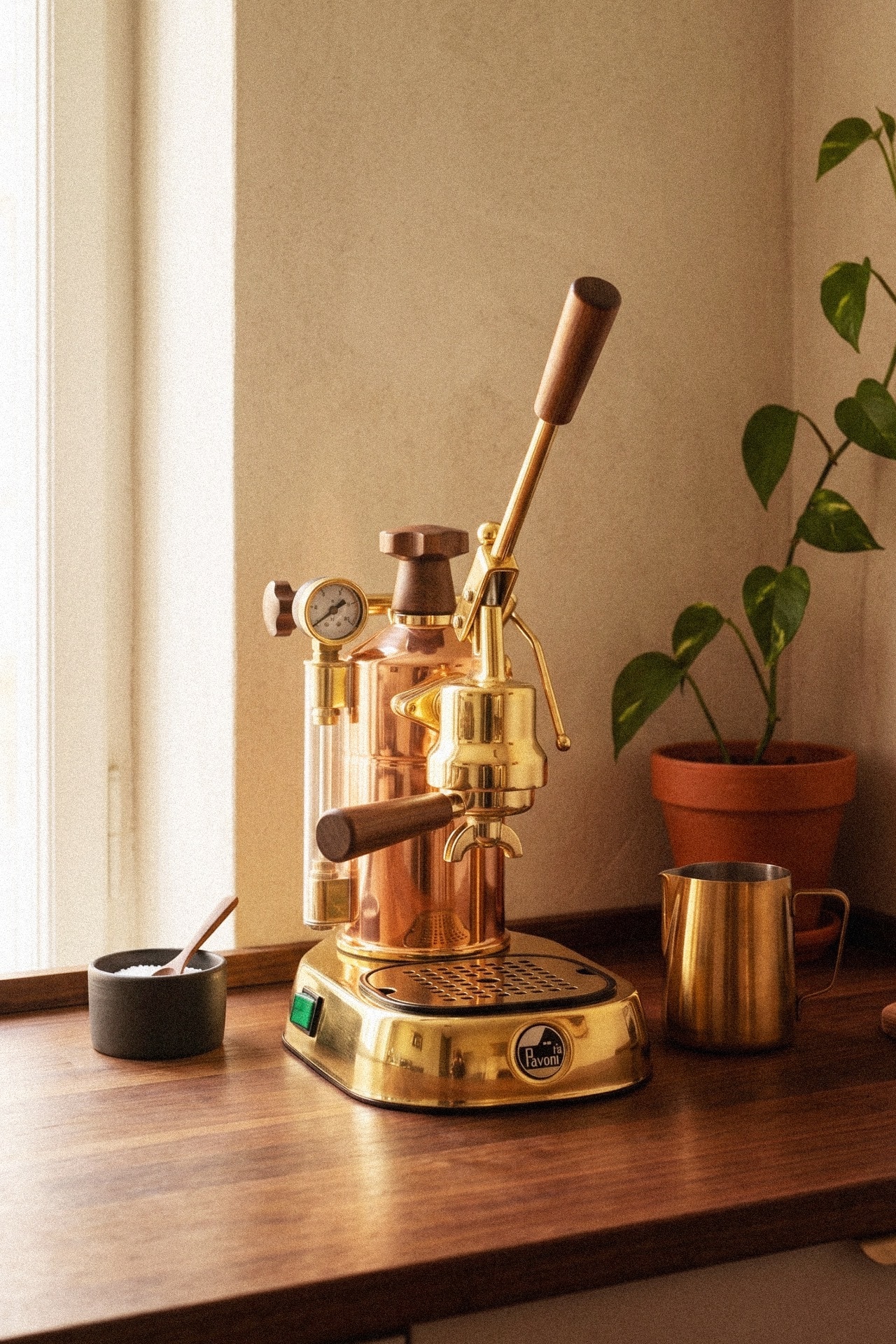
The kitchen counter is often a place where chaos lives. There are papers, keys, and too many utensils.
If you clear this away and leave only one serious object, the mood changes completely. A polished stainless steel French press or a professional espresso machine with industrial lines shows that you care about your morning coffee and your design choices.
This idea can also move to other spaces. In the dining room, a heavy steel juice press on the sideboard looks very orderly. It is about choosing utility that does not look ugly when it is not in use. It is a very honest way to decorate.
Ideas to explore:
- Place a polished stainless steel espresso machine on the main kitchen worktop.
- Stand a retro brass electric kettle on the kitchen island.
- Position a classic chrome citrus press on the dining room sideboard.
6. Layer in heavy, ribbed and tinted glassware
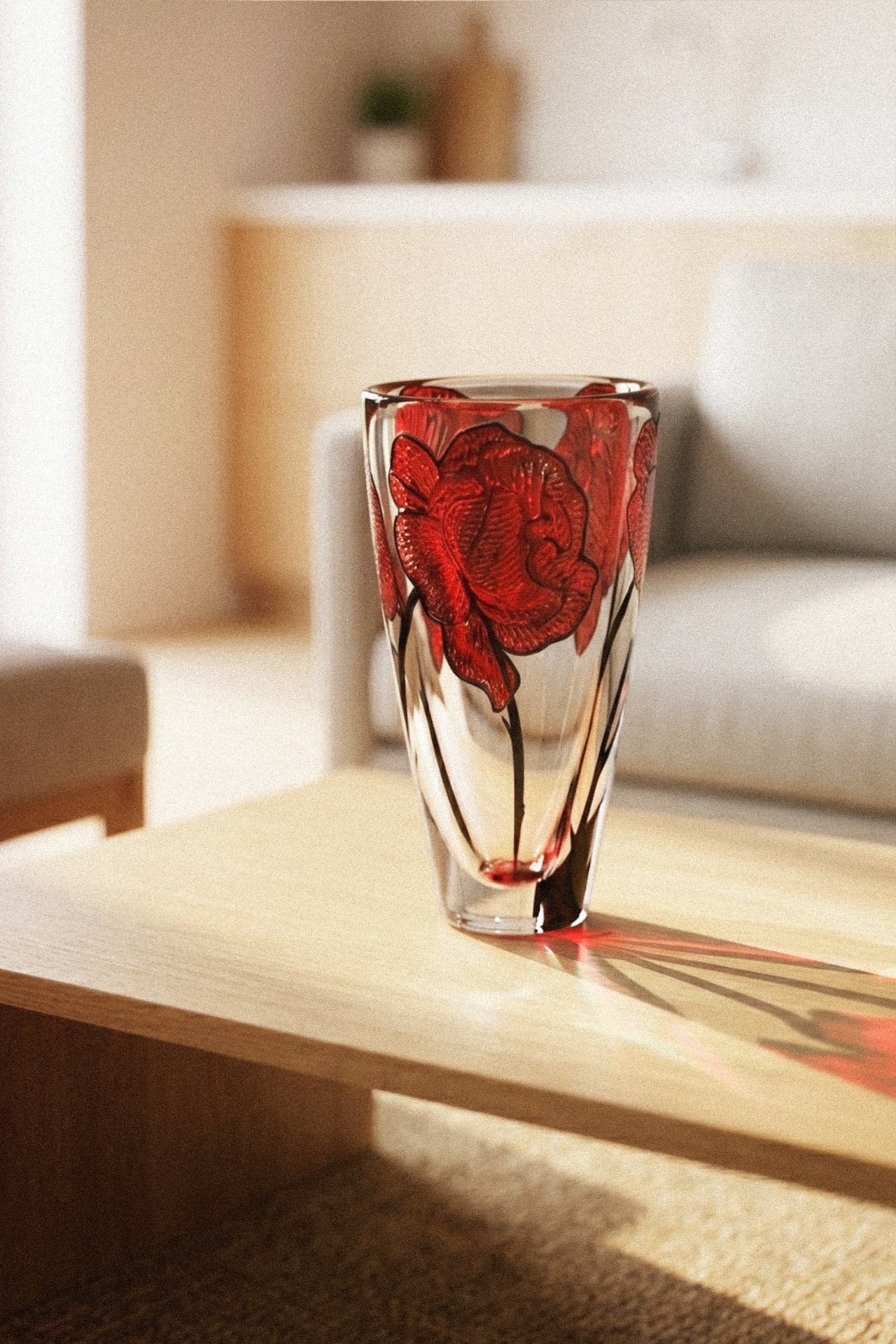
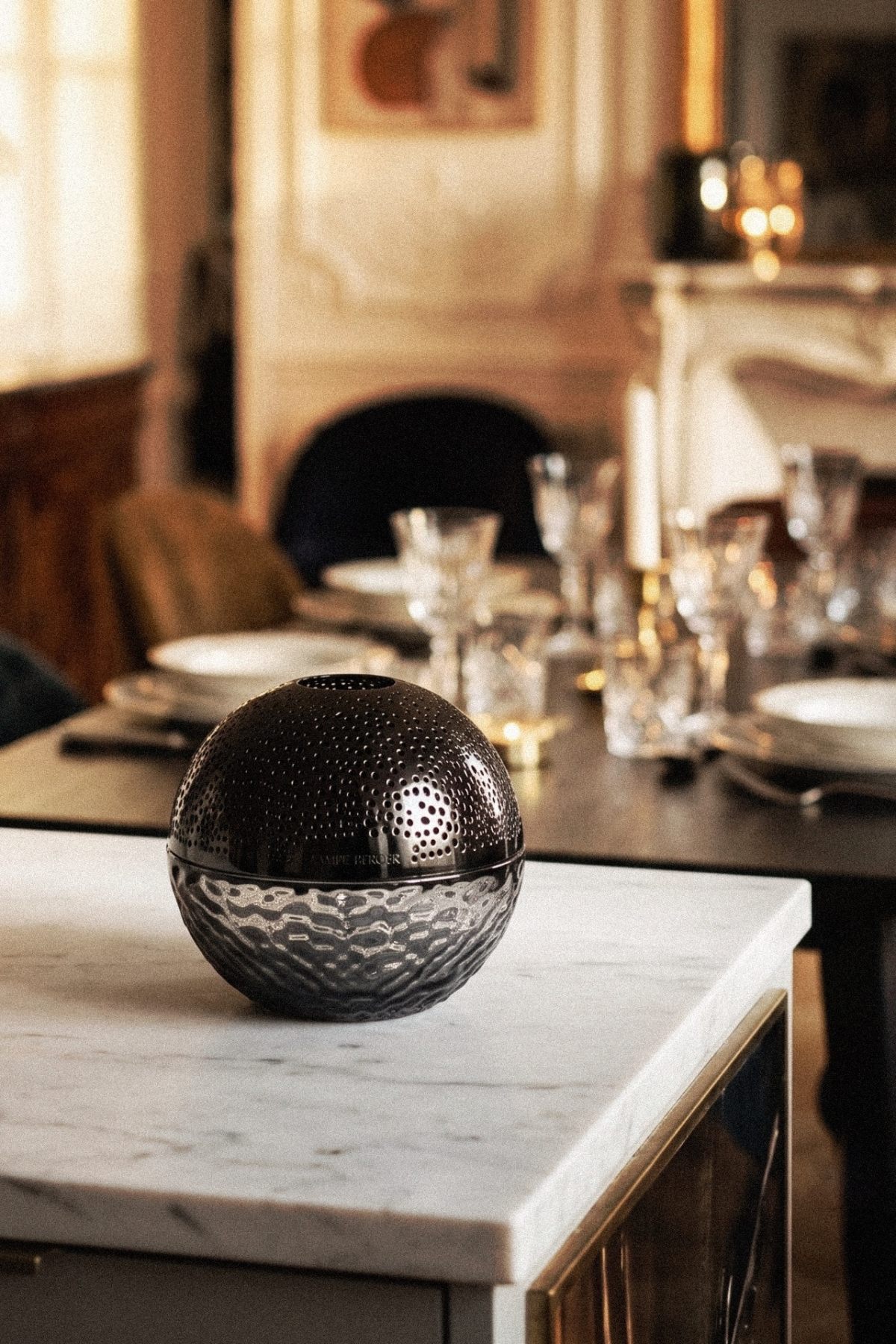
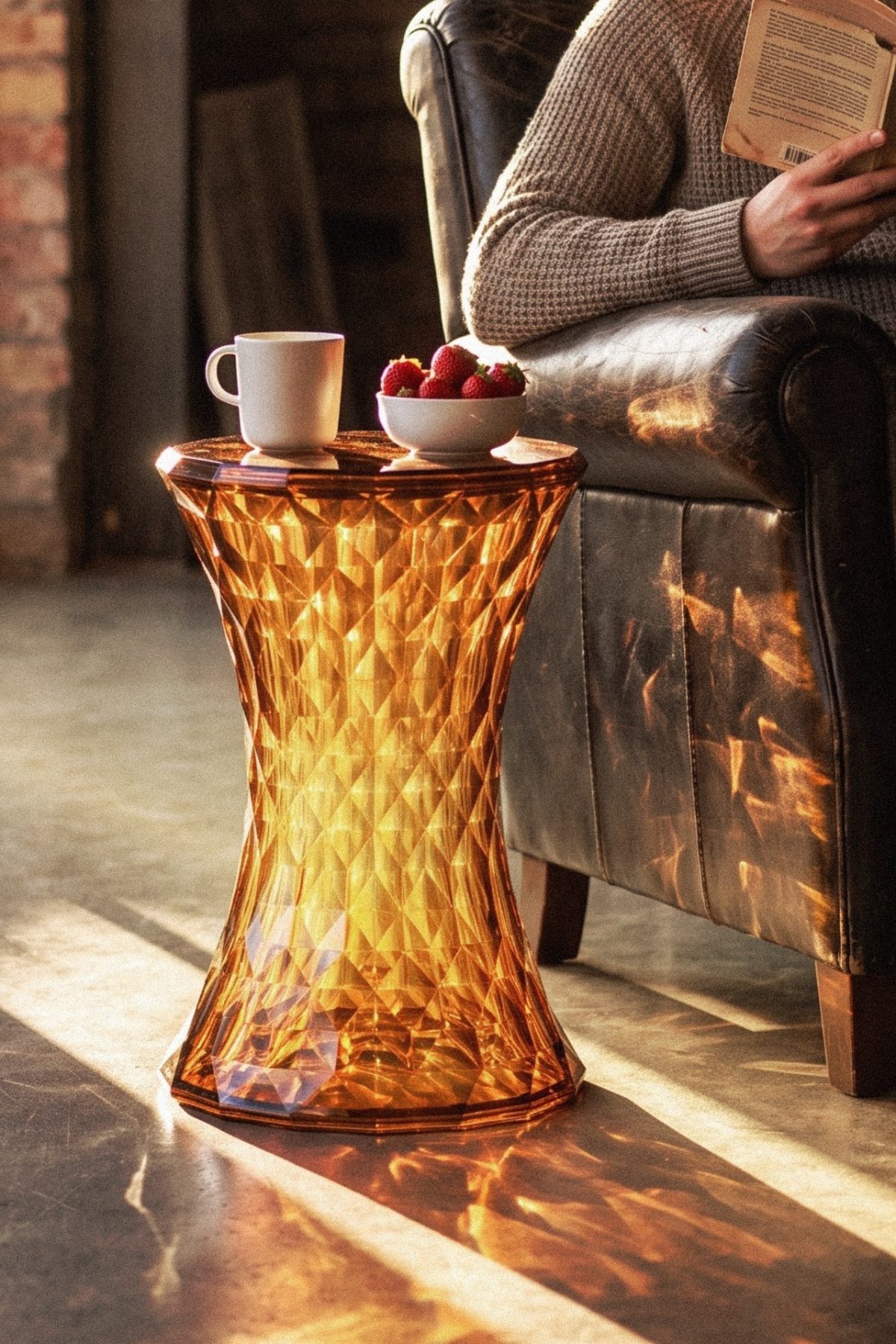
Glass is a pleasant material because it changes with the weather. When you use hand-blown glass with ribs or diamond shapes, it catches the grey Northern light and makes it warm. And glass is very Neo Deco.
On a windowsill in the living room or even on a shelf in the bathroom, a smoke grey or amber vase does not take up visual space, but it adds a layer of intelligence.
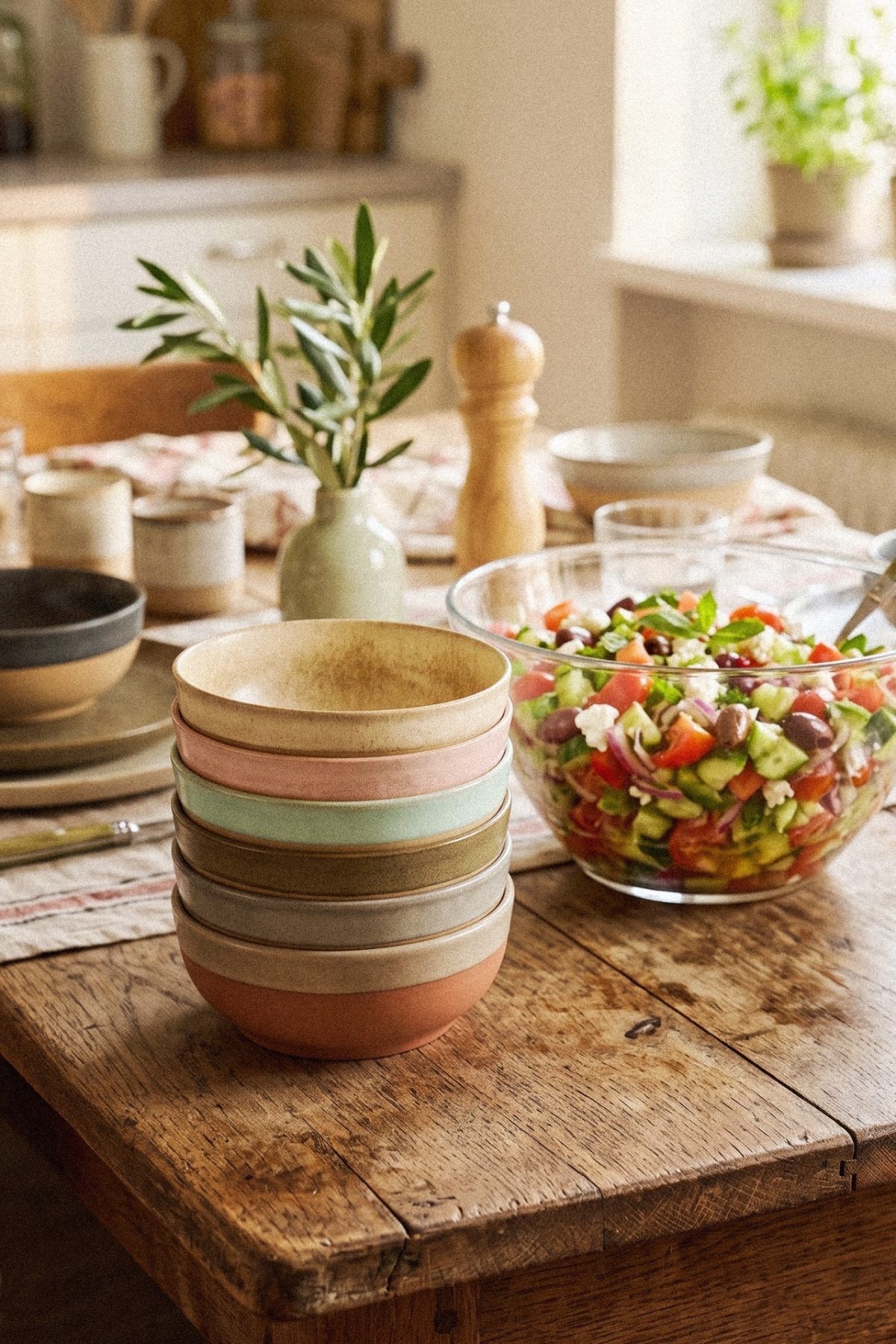
You can also use this in the kitchen. Instead of hiding your water carafes and bowls in the cupboard, keep a few stackable olive green glass pieces on an open shelf. When the sun passes through them, they throw geometric shapes onto the wall. It is a free decoration.
Ideas to explore:
- Arrange three ribbed amber glass vases of different heights on the living room windowsill.
- Keep a smoke grey glass water carafe and matching cups on the home office desk.
- Place an olive green geometric glass bowl for soap on the bathroom counter.
7. Anchor your rooms with bold, geometric area rugs
If your flooring feels a bit cold and empty, you do not need to replace the floorboards to change the room’s dynamic.
A large, structurally minded area rug can completely ground a space. Instead of completely blank carpets, look for rugs that use simple, large-scale Neo Deco geometry – like interlocking circles, clean blocks of colour, or thick linear borders.
In a large living room or open-plan dining space, a heavy wool rug acts like an anchor for your furniture, grouping your simple Scandinavian pieces into a cohesive, organized zone. In a hallway or entryway, a long geometric runner instantly transforms a plain transition space into a confident, welcoming gallery.
Ideas to explore:
- Lay a large, cream wool rug with a thick charcoal linear border under the living room sofa.
- Place a terracotta and sand-coloured geometric runner in a long, narrow hallway.
- Position a low-pile rug with a subtle, overlapping arch pattern beneath the dining table.
8. Focus on symmetrical, low-level lighting
The ceiling light is often the enemy of a cosy evening. It is too bright and makes everything look flat, like a hospital.
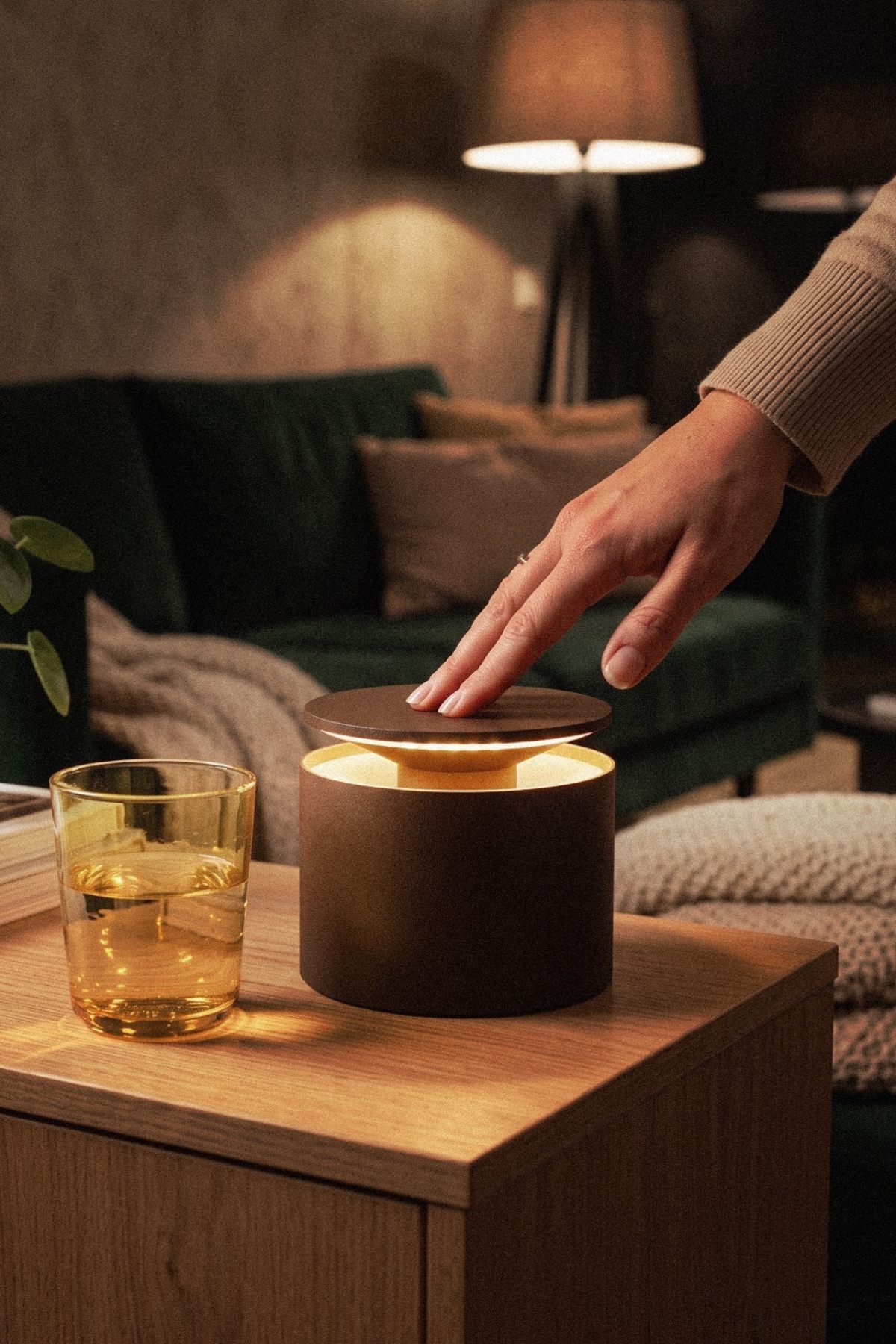
Neo Deco relies on balance. By placing two identical table lamps with angular shades at each end of a surface, you create a calm zone. The light goes down, and the shadows stay soft.
This symmetry works nicely on a mantelpiece, but also in the bedroom on the bedside tables. In the hallway, if you have a long shelf, two small lamps at the ends make the entrance feel very welcoming when you come home from work in the dark winter months.
Ideas to explore:
- Position two identical angular black lamps on either side of the living room sideboard.
- Place a pair of small brass bedside lamps with structured shades in the bedroom.
- Set two identical low-level lamps at the ends of a long hallway shelf.
9. Bring in texturally dense, geometric textiles
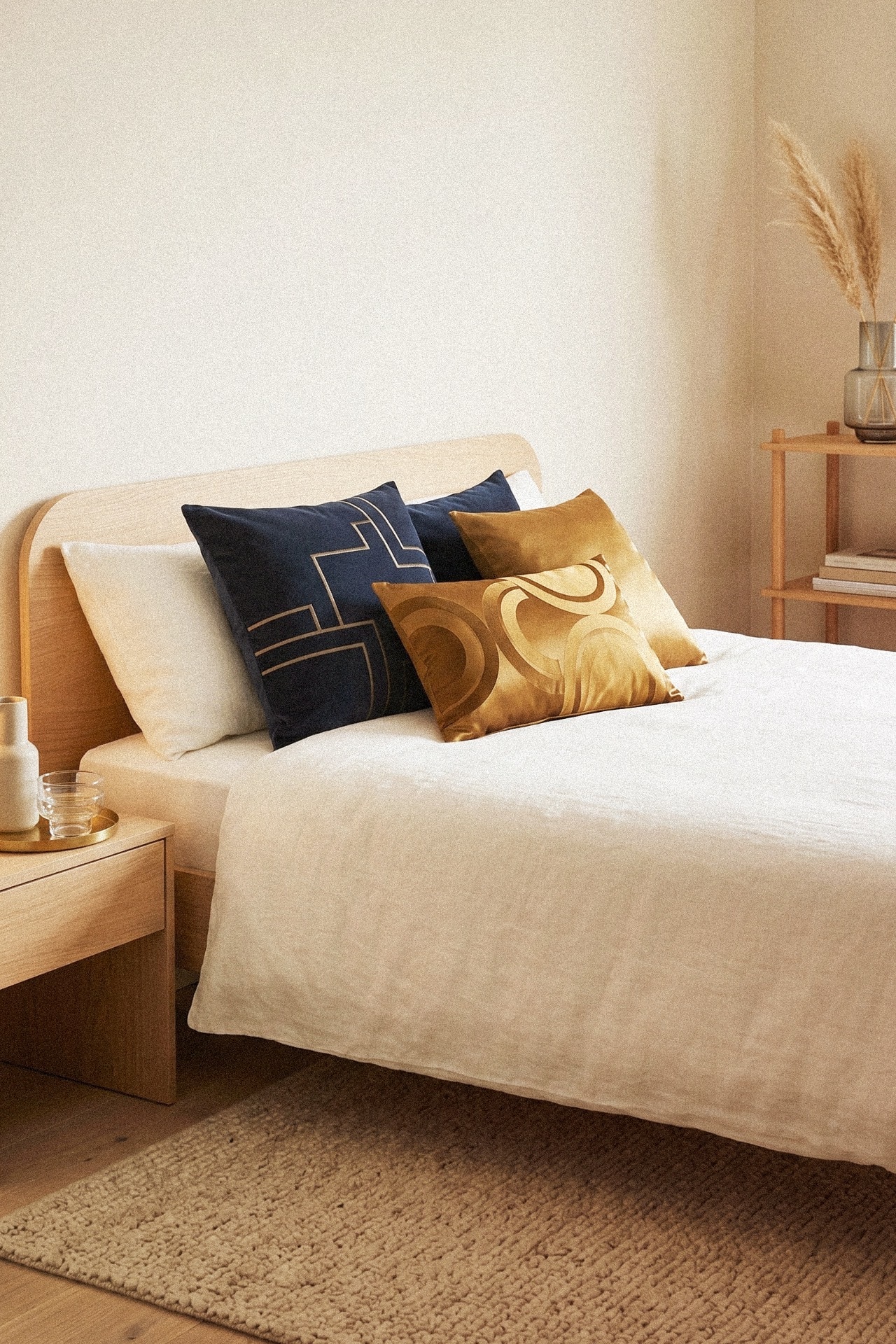
We must have some comfort, but it should not look lazy. A sofa with too many soft, floppy cushions looks untidy.
Instead, choose a few cushions that have a firm shape and clean, abstract stitching. A heavy wool throw in terracotta or burnt sienna gives the warmth you need without losing the structure of the furniture.
This is also useful for the guest room or the bed. A textile with a rhythmic, bold line gives a sense of quiet luxury. It feels proper and well-made. It is a very straightforward way to bring the style into the room without changing the furniture.
Ideas to explore:
- Lay a terracotta wool throw with subtle linear stitching across the living room sofa.
- Place two midnight navy cushions with geometric patterns on the main bed.
- Use a burnt sienna texturally dense rug with simple lines in the centre of the home office.
10. Elevate your plants with structured, pedestal planters
Plants are a staple of the functional modern home, but how you display them changes everything.
Instead of placing standard terracotta pots directly on the floor or on windowsills, try elevating a few choice green plants onto architectural pedestals or high, structured planters. Look for stands made from blackened iron, fluted ceramic, or dark walnut with clean, stepped lines.
In the living room or bedroom, lifting a large fern or a fiddle-leaf fig off the ground adds immediate vertical interest and structural weight to an empty corner. In a bathroom, placing a smaller trailing plant on a slender, geometric stand next to the bathtub breaks up the flat planes of the wall tiles with an elegant, early twentieth-century silhouette.
Ideas to explore:
- Place a large Monstera in a fluted ceramic planter on a black iron pedestal in the living room corner.
- Position a slim, stepped walnut plant stand with a trailing ivy next to the bathroom window.
- Set a pair of identical, low geometric brass planters on the hallway console table.
Our recommended Neo Deco resources
If you are ready to take the next step and explore the available options, we have gathered a few proper places to start. Below is a curated list of links to Neo Deco essentials around the web (we may earn a small fee if you buy something):
- Neo Deco home decor and appliances – idea list on Amazon US
- Neo Deco furniture and decor – a curated list on Anthropologie
- Georg Jensen’s Amazon store – lots of Neo Deco home decor, tableware, and barware
- Neo Deco market on Etsy – over 2,000 listings for wall art, dinnerware, small decor
- Art Deco inspired home decor, accessories, and fashion – Bloomingdale’s
- Neo Deco home decor from European brands – Amazon UK

 Ohävn
Ohävn 
You must be logged in to post a comment.