
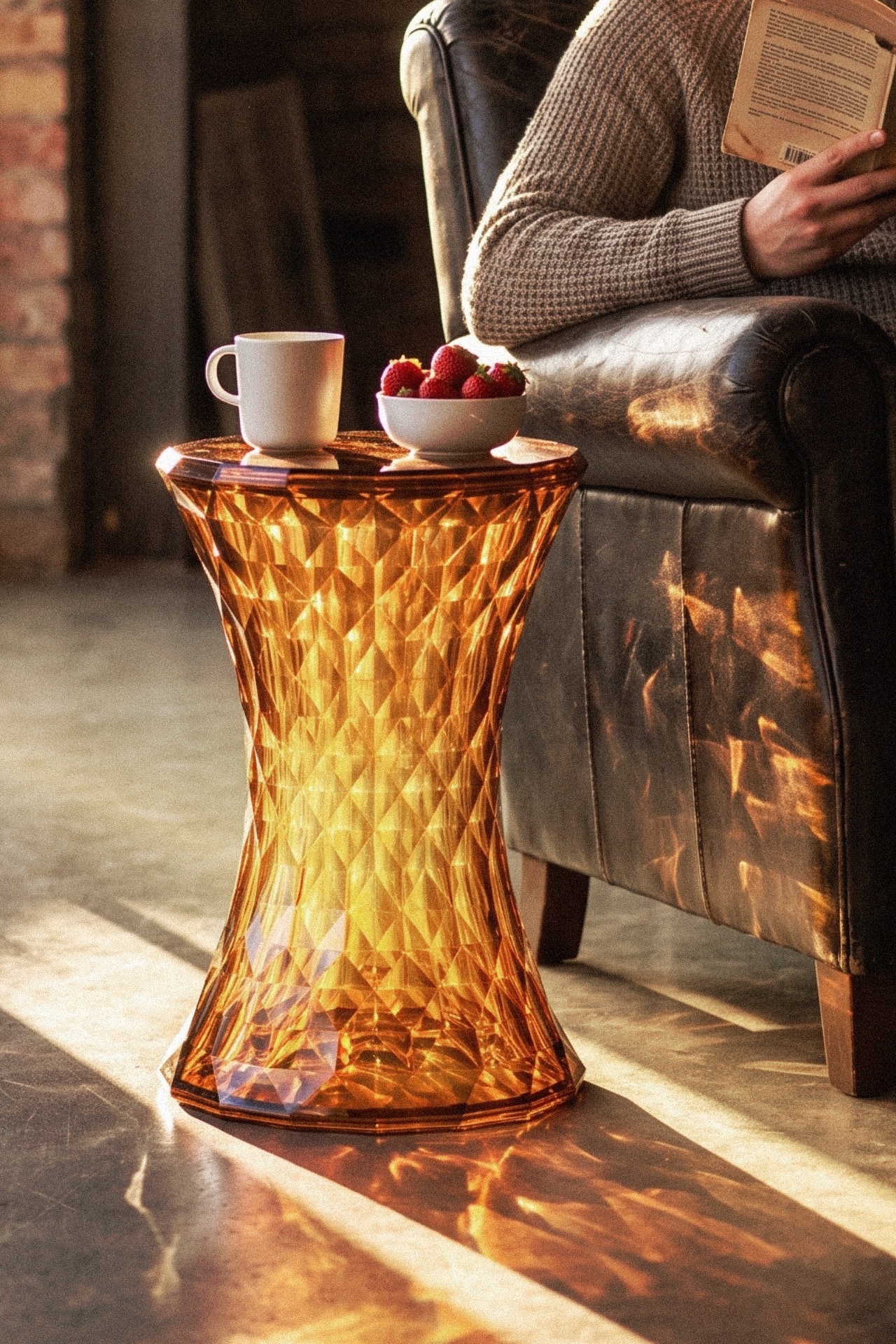
Adding a Neo Deco feel to your home does not mean you must rebuild the whole salon. It is more about introducing a few items that have clear geometric symmetry and a certain structural honesty. You can easily achieve this look by pairing clean, functional furniture with objects that manipulate the incoming light.
The Kartell stool works adequately for this purpose because of its hourglass silhouette. The regular, repetitive geometric facets carved into the surface create a visual rhythm that is highly characteristic of the Art Deco era, but in a stripped-back way. It provides that classic symmetry without forcing you to buy heavy, antique wooden cabinets that take up too much floor space.
The transparency of the polycarbonate material prevents the room from becoming visually cluttered. A traditional deco piece can look quite dominant, but this transparent object allows the light to pass through, keeping the space open. The material acts a bit like a prism, throwing subtle patterns on the floor when the sun emerges.
Kartell itself has quite a long history of making respectable home decor. Founded in Italy in 1949 by Giulio Castelli, the company actually started by producing car accessories before they began making household goods. They became quite clever at chemical engineering, which allowed them to transform industrial polymers into high-design furniture.
This Kartell Stone stool in transparent amber is also available on Amazon.



 Ohävn
Ohävn 
You must be logged in to post a comment.