
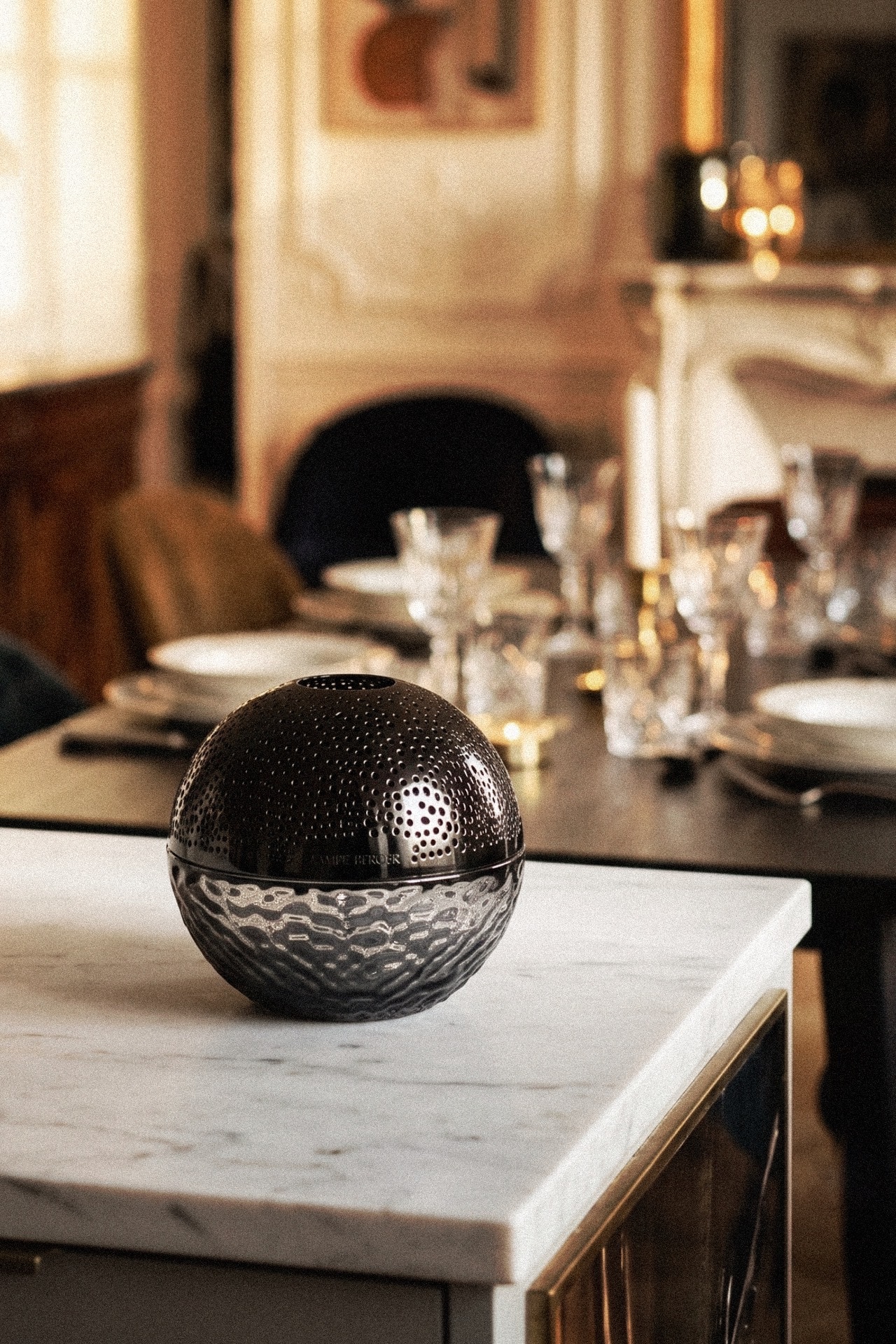
It is a familiar situation for many of us. You have spent hours cooking a decent meal, perhaps frying some fish or roasting onions, and now the guests are arriving in thirty minutes. You do not want your home to smell like a commercial kitchen when they step inside.
The Maison Berger catalytic fragrance lamp offers a highly rational and stylish solution. This object functions as a modern, sculptural centerpiece for the living room, but it possesses a very clear practical goal. Instead of simply masking bad smells with heavy artificial perfumes, the catalytic burner actually helps neutralize unwanted odors first, before it begins diffusing a delicate fragrance to refresh the atmosphere.
The system works through a high-temperature catalytic combustion process that breaks down the odor molecules in the air. It does the job efficiently without requiring constant attention, which is exactly how a functional household item should behave.
The history of this French company is also rather interesting. A pharmacy assistant named Maurice Berger invented the system way back in 1898 to clean the air in hospital wards where hygiene was critical. Later, in the 1930s, the company added fine fragrances and collaborated with noted designers to make the bottles look nice, transforming a clinical tool into an item for the well-ordered home.
This Maison Berger catalytic fragrance lamp is also available on Amazon. Please note that the fragrance refill for this lamp is sold separately.






 Ohävn
Ohävn 
You must be logged in to post a comment.