
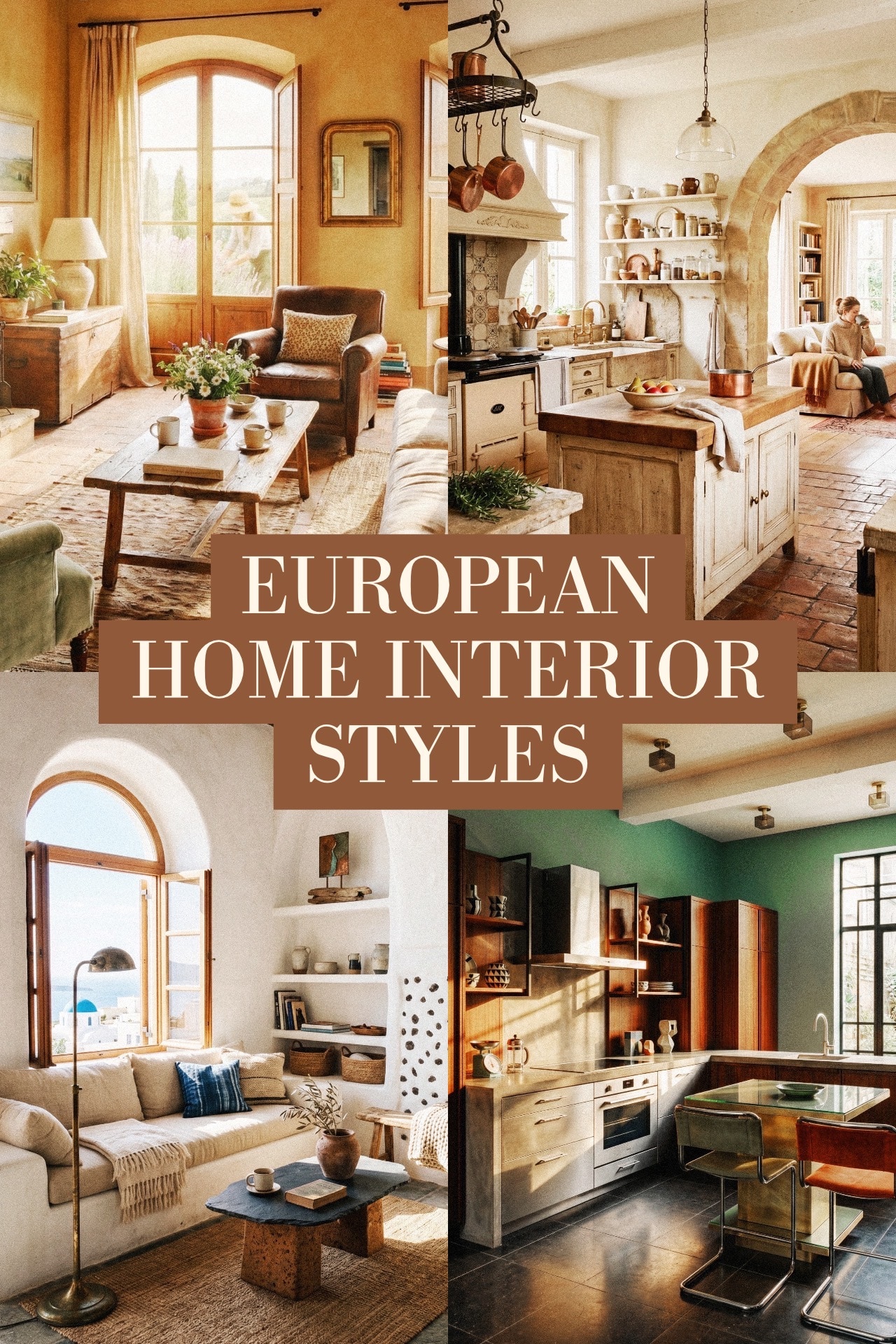
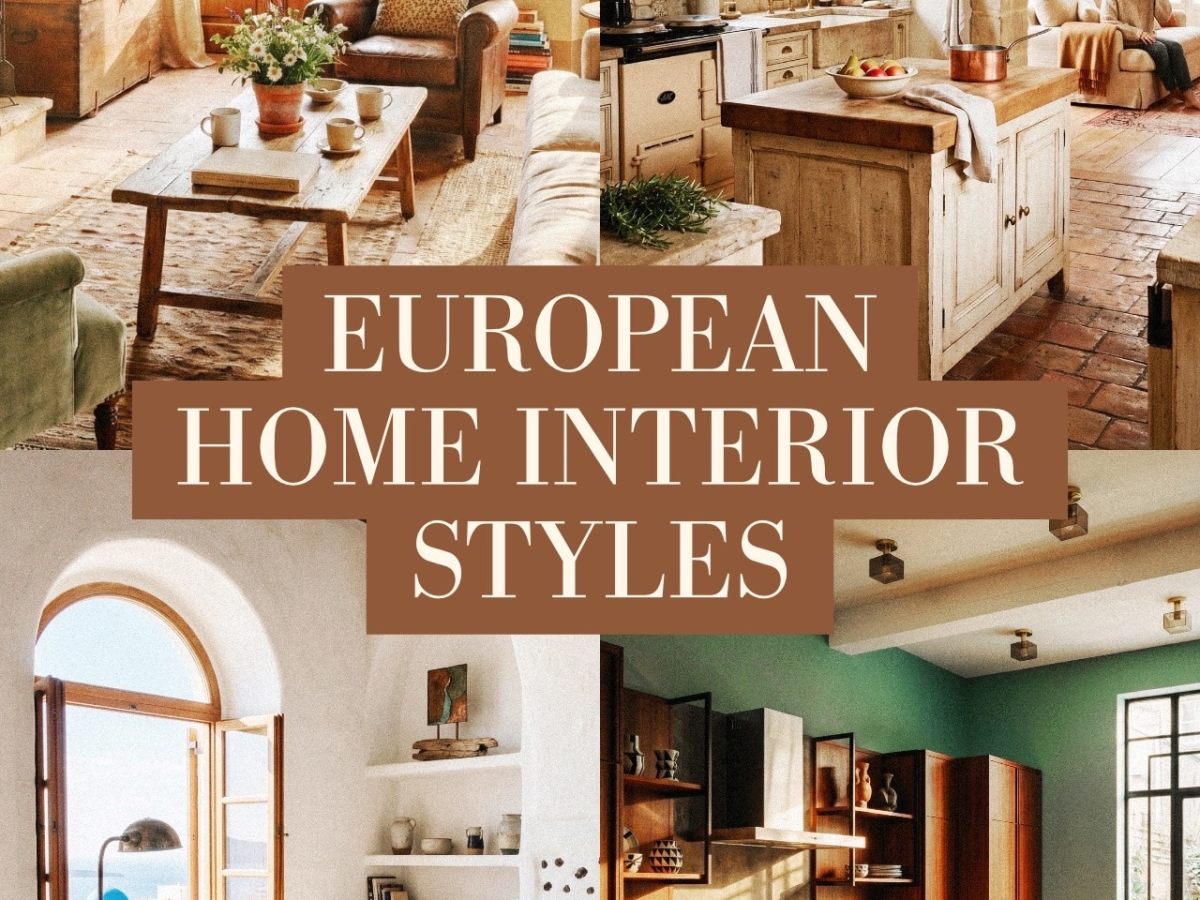
This guide looks at twelve regional European home interior styles from a practical perspective. We examine how climate and history shape the way people use wood, stone, and metal to create a functional indoor environment.
The way people arrange their houses tells quite a lot about how they manage their lives.
In Europe, we have many borders but also many different ideas about what a room should do for a person. Some people like to show their family history with many old pictures, while others just want a floor that is easy to sweep after a rainy day. It is a matter of climate and temperament, mostly.
We have gathered twelve distinct ways of looking at four walls and some furniture. It is not about buying expensive things to show your neighbours how much money you have. It is more about a logical system where materials and colours work together so you do not get a headache when you sit down after work.
In the colder parts of the continent, the design is driven by a lack of light. You paint everything white because the sun goes away in November and does not come back for a long time. In the south, the problem is the heat, so the walls are thick and the windows are small. It is quite simple physics, really, but people call it style.
This guide is made to compare these traditions without using the loud words often found in glossy design magazines. We do not have any life-changing secrets here, just a practical breakdown of how different regions use wood, stone, and metal to create a functional indoor environment.
You can look at the table below to see the differences clearly. It is organised so you can see what happens when you mix German engineering with French history, or what happens when a person on a Greek island decides he does not need wooden furniture at all. It is a useful overview for your own planning.
Table of contents
European home interior styles preview
Scandinavian – design from the Nordic countries focusing on functionality, light colours, and natural wood. It is quite simple because winters are dark, so people want to keep rooms bright and practical without too much clutter.
Bauhaus – a German style where form follows function. It uses industrial materials like tubular steel, glass, and concrete. There are no unnecessary decorations here, just straight lines and geometric shapes that make sense for manufacturing.
Belgian Minimalist – a warm approach to minimalism using oversized linen sofas, raw timber, and concrete. It looks expensive but unpolished, focusing on texture and neutral tones rather than lots of furniture objects.
Parisian Chic – classic French apartments with high ceilings, ornate wall moldings, and herringbone parquet floors. The style blends antique family pieces with modern art, looking like it was put together without trying too hard.
French Provincial – rustic style from the French countryside, especially Provence. It features whitewashed oak, wrought iron, and soft colors. It is less formal than the Parisian style, focusing on comfortable, sturdy farmhouse furniture.
English Country House – a layered style that looks lived-in for generations. It includes mismatched floral fabrics, oil paintings, old books, and comfortable chesterfield sofas. It is not overly tidy, which is the point.
Italian Modern – sleek, low-profile furniture with high-end materials like polished marble, lacquer, and fine leather. It focuses on sharp tailoring and bold, sculptural shapes from Milanese design houses.
Tuscan – warm Mediterranean aesthetic using terracotta floor tiles, exposed ceiling beams, and stone walls. The colours reflect the landscape, featuring ochre, olive green, and washed plaster surfaces.
Spanish Revival – interiors with dark wood carved furniture, white stucco walls, and colourful ceramic tiles. It often incorporates arched doorways and wrought-iron details, creating a heavy but cool environment against the southern sun.
Greek Cycladic – whitewashed walls with rounded corners and built-in stone furniture. Inspired by the islands, it uses blue accents, rough textures, and a very sparse layout to maximize airflow and coastal light.
Industrial Berlin – raw apartment style using exposed brick, concrete floors, and salvaged factory lights. It feels a bit gritty and unfinished, reflecting the creative, adaptive reuse of old buildings in the city.
Vienna Secession – an early twentieth-century style blending art nouveau with geometric clarity. It features high-quality craftsmanship, dark wood, brass details, and stylized organic patterns that look elegant but controlled.
European home interior styles comparison
| Style name | Materials | Colours | Layout | Details |
| Scandinavian | Pale oak, wool, plain linen | Chalk white, grey, sage green | Open-plan, functional groups | Paper lamps, simple glassware |
| Bauhaus | Tubular steel, concrete, glass | Stark white, black, primary red | Grid-based, strict right angles | Round wall clocks, steel lamps |
| Belgian Minimalist | Reclaimed oak, lime plaster, stone | Oatmeal, dove grey, warm taupe | Symmetrical, oversized scale | Large ceramic pots, dry branches |
| Parisian Chic | Parquet, white marble, velvet | Antique white, velvet black, gold | Casual angles, high ceilings | Gilded mirrors, ornate moldings |
| French Provincial | Weathered wood, terracotta, iron | Lavender blue, soft cream, olive | Farmhouse kitchen focus | Copper pots, wicker baskets |
| English Country House | Mahogany, tartan wool, chintz | Hunter green, crimson, tea beige | Dense clusters, fireside focus | Old oil portraits, rows of books |
| Italian Modern | Polished marble, premium leather | Charcoal, bright tan, navy blue | Low-slung, wide horizontal line | Arching floor lamps, design books |
| Tuscan | Unglazed terracotta, stone, hemp | Burnt ochre, olive green, cream | Simple, thick perimeter walls | Olive oil jars, iron wall sconces |
| Spanish Revival | Stucco, dark walnut, ceramic tile | Cobalt blue, terracotta, white | Arched passageways, heavy base | Carved chests, iron candlesticks |
| Greek Cycladic | Molded plaster, sea stone, reed | Aegean blue, pure whitewash | Built-in stone beds, low arches | Blue shutters, plain cushions |
| Industrial Berlin | Exposed brick, concrete, steel | Rust iron, concrete grey, black | Open loft, iron glass partitions | Factory pendants, metal lockers |
| Vienna Secession | Ebony wood, polished brass, marble | Hoffmann black, cream, emerald | Strict symmetry, repeating grids | Checkered patterns, brass domes |
Scandinavian
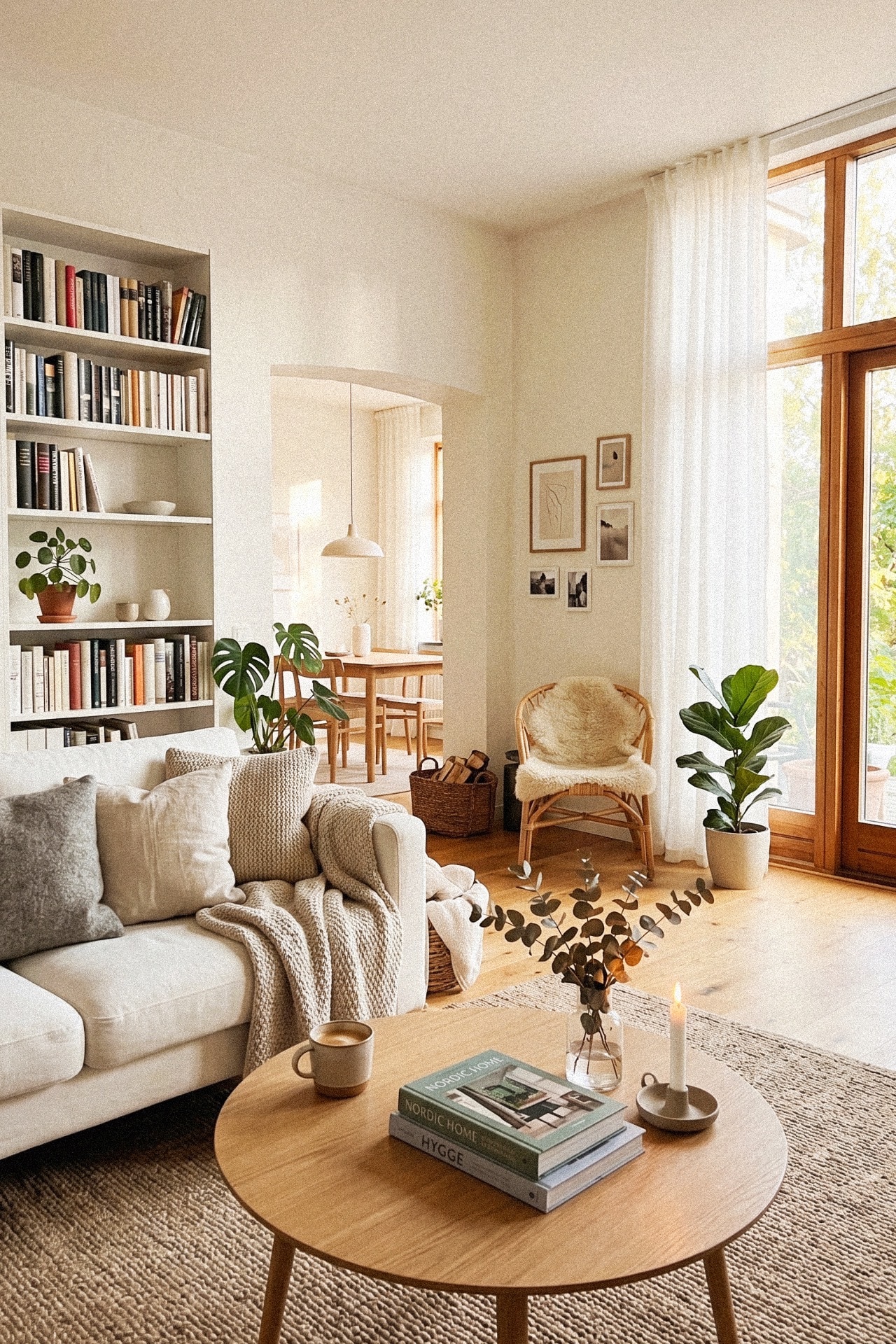
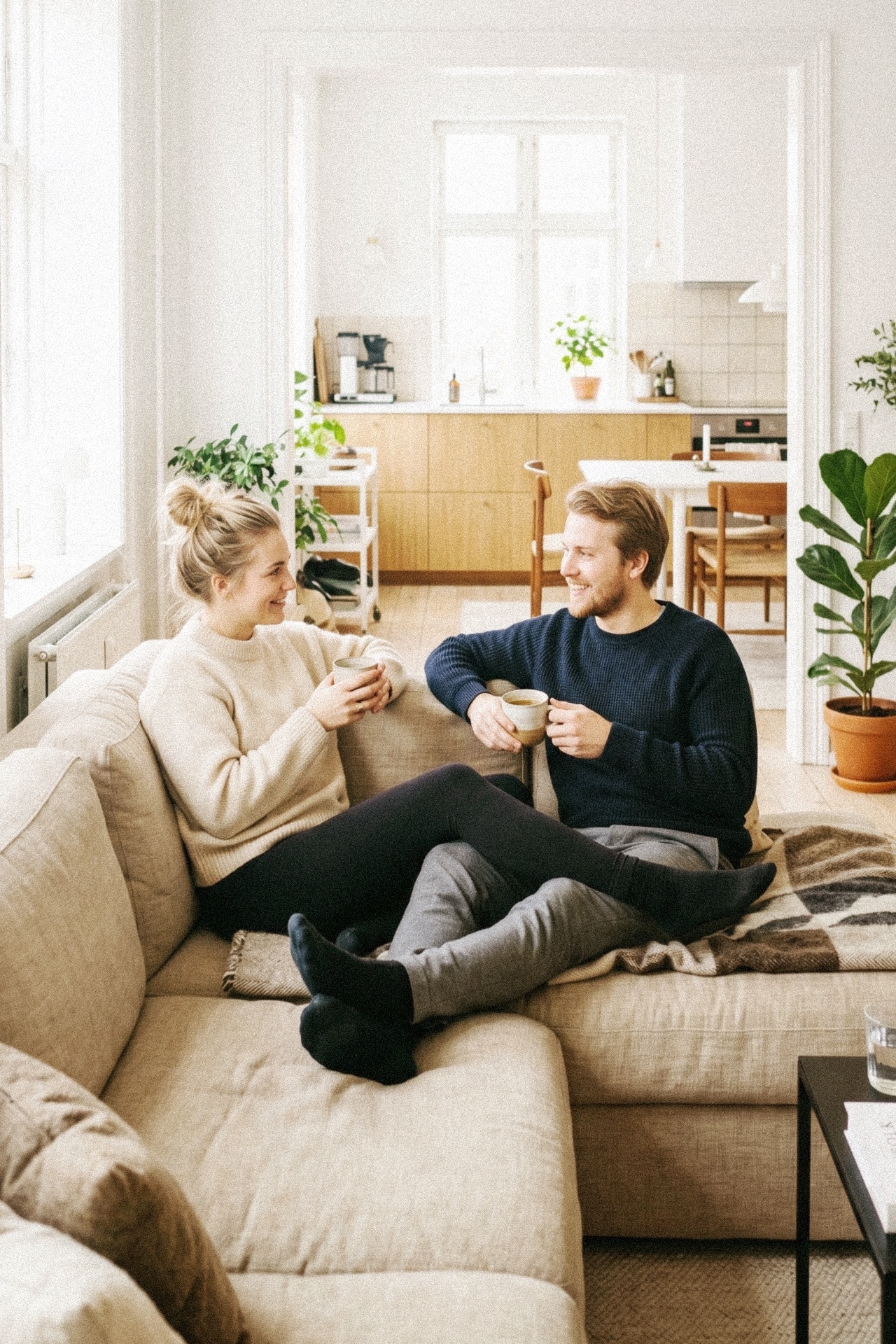
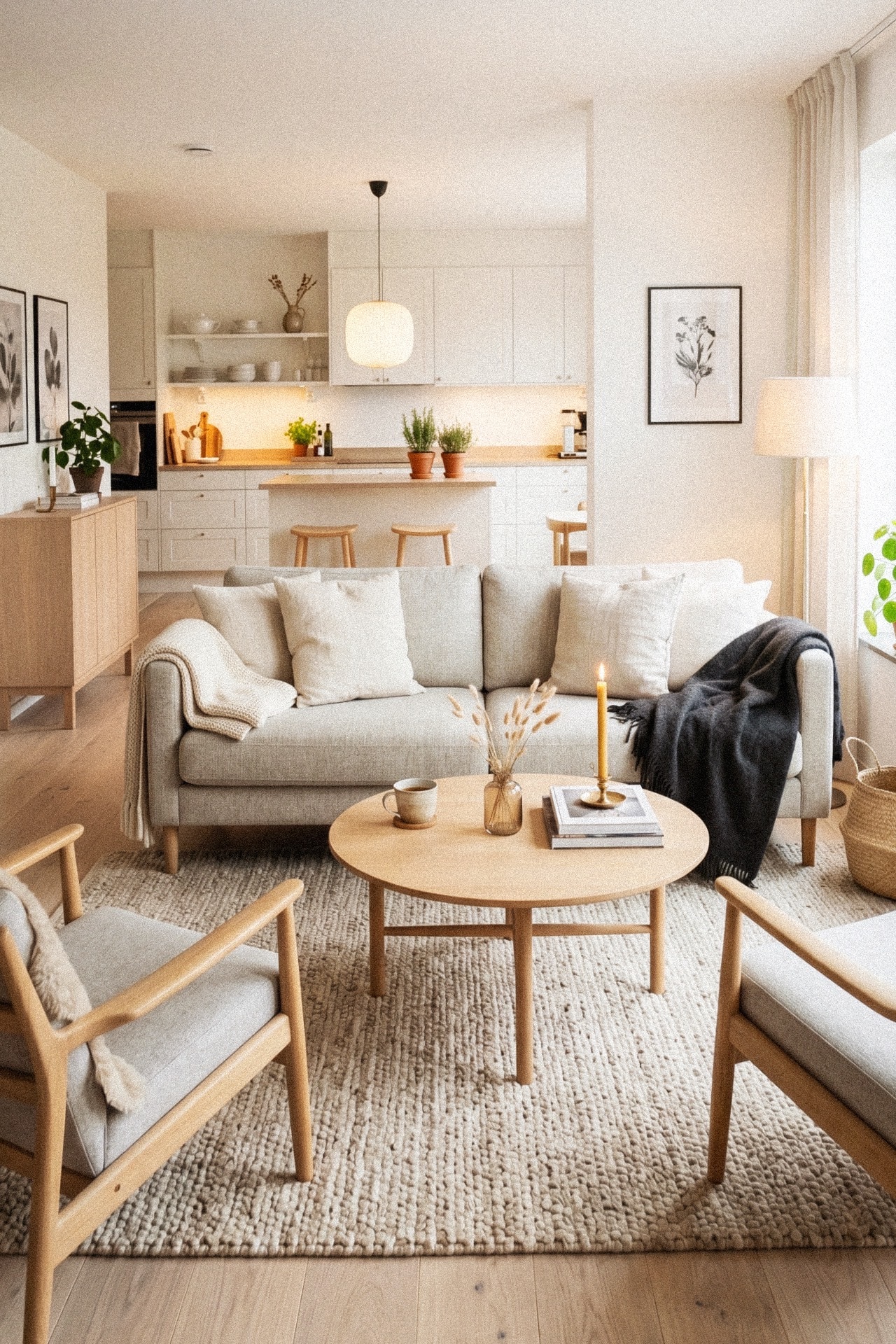
People in the north spend much time indoors because the winter is long and rather dark. The main goal of a Scandinavian room is to catch every bit of daylight that comes through the window. Therefore, walls are usually painted white or very light grey, and windows are left bare without heavy textile curtains.
The layout is logical and keeps walkways clear. Furniture is kept away from the walls when possible to let the air and light circulate properly. Pieces are chosen because they have a function, not just to look nice or fill a corner. If a chair is not comfortable to sit in, it does not belong in the room.
Wood is the most important material, usually pale varieties like ash, beech, or pine. It is treated with light oil or soap instead of dark lacquer so you can still feel the texture of the tree. This brings a bit of nature inside when everything outside is covered in snow.
Textiles are simple and honest, like coarse wool and plain linen. They add warmth to the room without adding visual noise. Patterns are rare, and if they exist, they are simple geometric shapes or small prints inspired by plants.
It is a style for people who like order but do not want their home to feel like a cold hospital. Everything is clean, but it is meant to be lived in every day.
Materials and textures: pale oak, ash wood, boiled wool, unbleached linen, matte ceramic, cast iron, woven seagrass
Spatial layout and form: open-plan zones, low-profile furniture, floating shelves, clear walkways, elevated legs on sofas, functional grouping, maximized window space
Colour palette: chalk white, muted grey, soft beige, pale blue, sage green, charcoal accents, natural wood tones
Details and decor: paper lampshades, simple glass vases, monochrome art prints, wooden objects, green houseplants, functional candleholders, woven storage baskets
Bauhaus
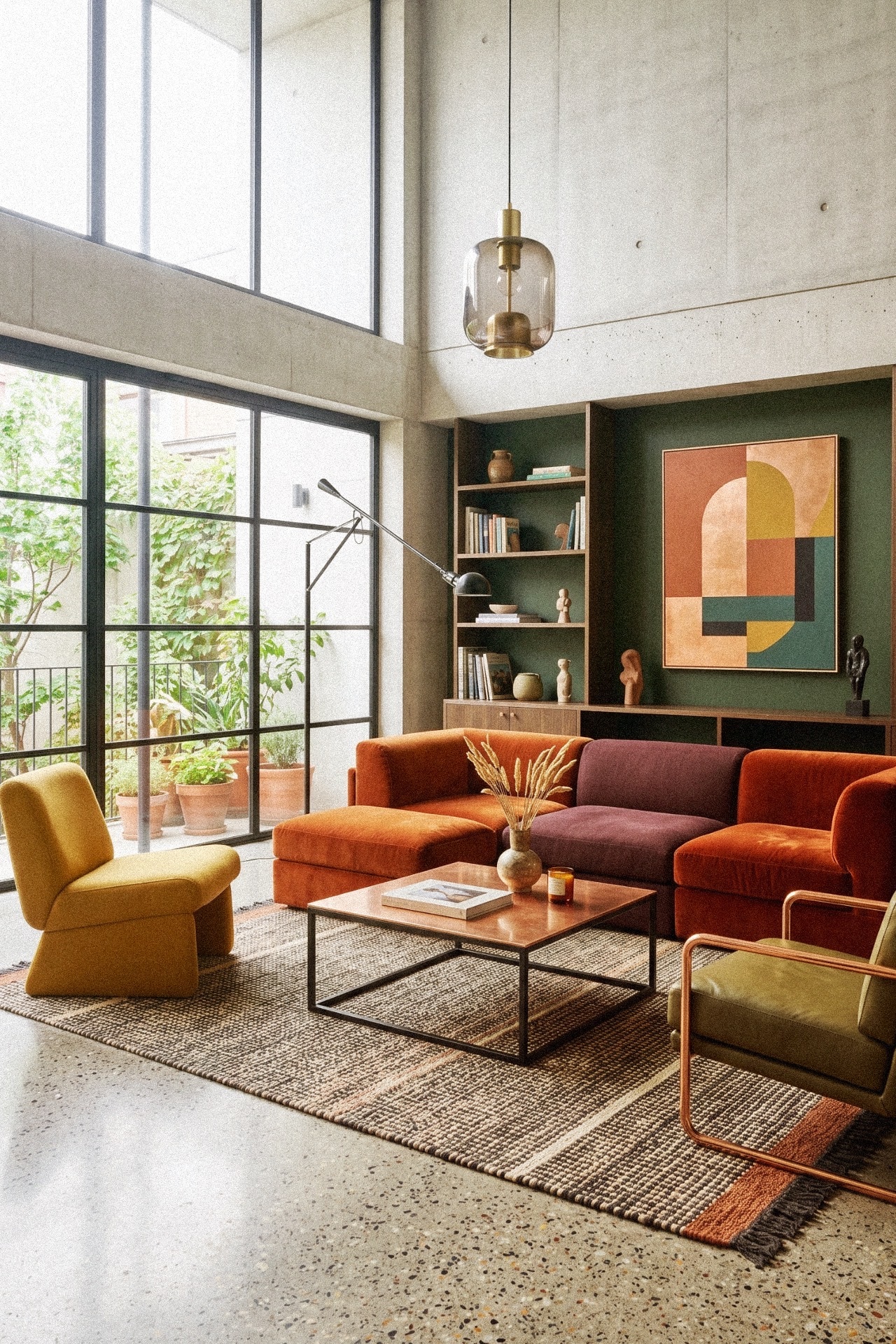
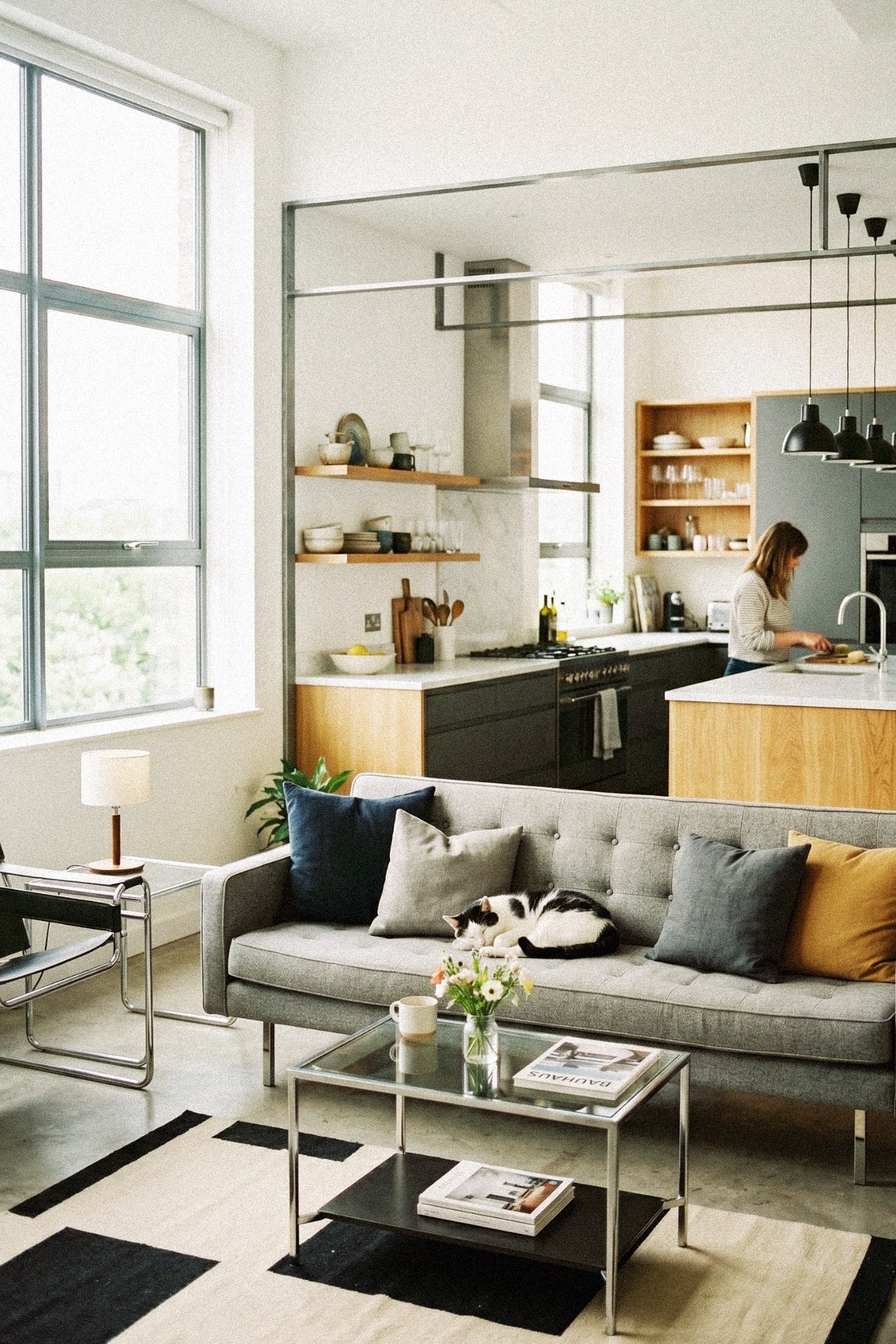
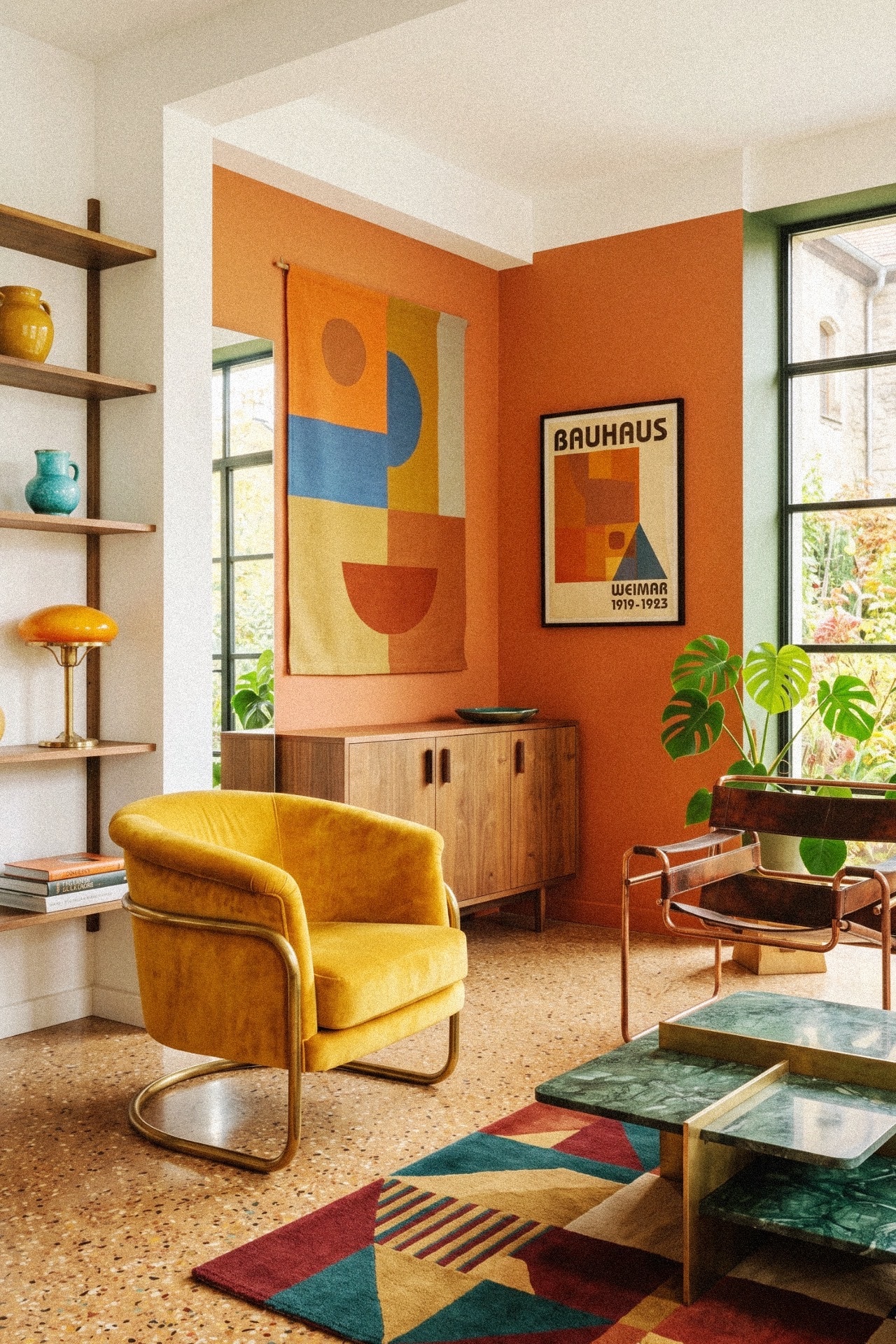
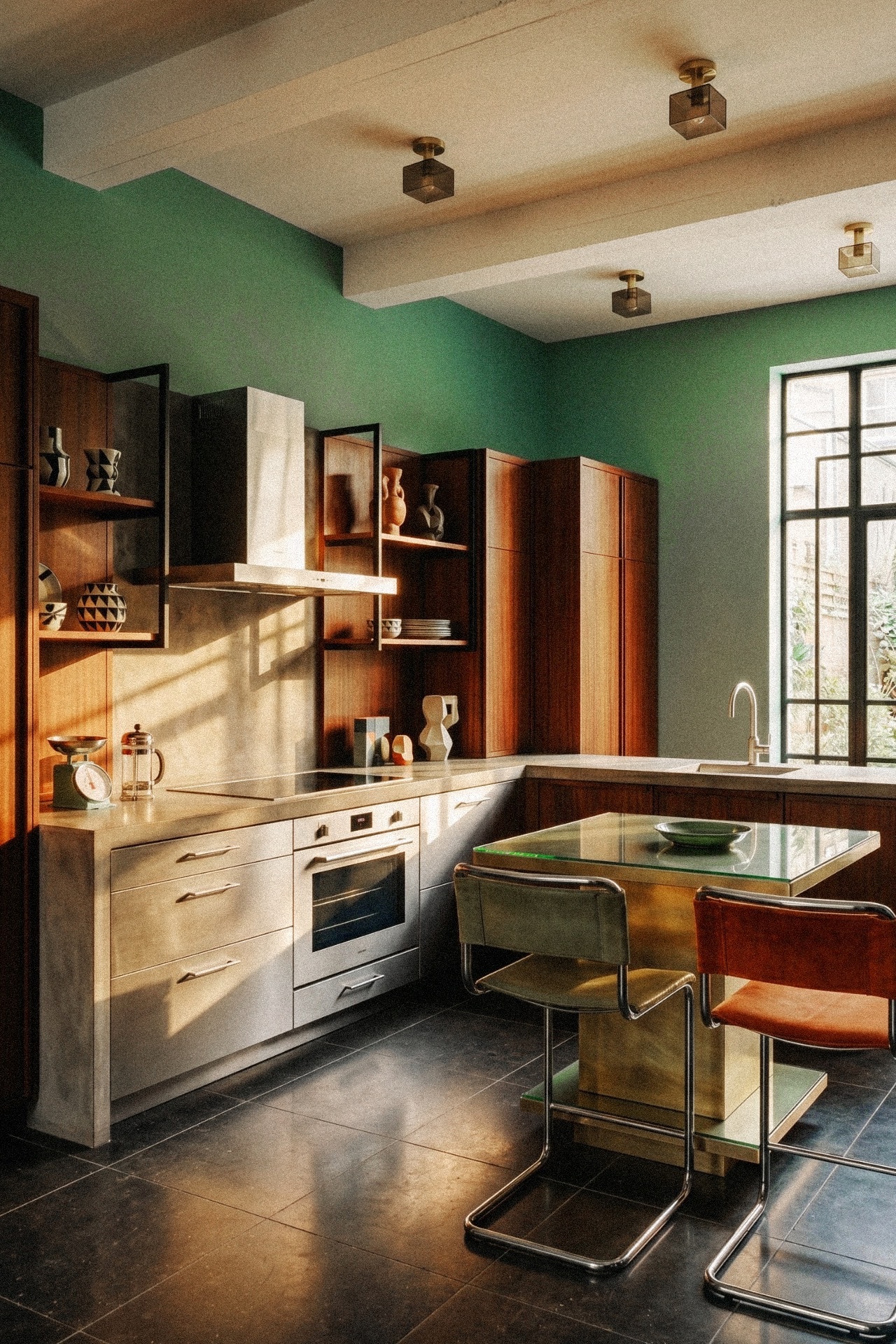
This German style started in a school where artists and engineers wanted to make things for the modern machine age. It is very rational. The idea is that if you design something to function perfectly, it will automatically look good. There is no historical decoration or hiding of how a piece of furniture is put together.
The layout follows strict geometry. Rooms are organized around straight lines and right angles, creating a sense of industrial order. Furniture is often lightweight and easy to move, made from mass-produced materials that were new in the 1920s.
Tubular steel is the signature material here, bent into shapes that support leather or canvas seats without needing thick upholstery. Concrete, glass, and flat sheets of wood are also common. Everything feels smooth, hard, and easy to wipe clean.
Color is used to define space rather than to decorate it. Large surfaces are neutral, while primary colors are placed carefully on a single wall or a specific piece of furniture to create balance. It is a very disciplined approach to living.
Materials and textures: tubular steel, sheet glass, smooth concrete, chrome plating, industrial leather, thick canvas, lacquered plywood
Spatial layout and form: grid-based arrangement, cantilevered structures, integrated storage walls, folding furniture, geometric zoning, strict right angles, visual economy
Colour palette: stark white, industrial grey, jet black, primary red, primary blue, primary yellow, chrome metallic
Details and decor: round wall clocks, spherical glass lights, abstract textile wall hangings, steel desk lamps, technical drawings in simple frames, functional ash trays, tubular coat racks
Belgian Minimalist
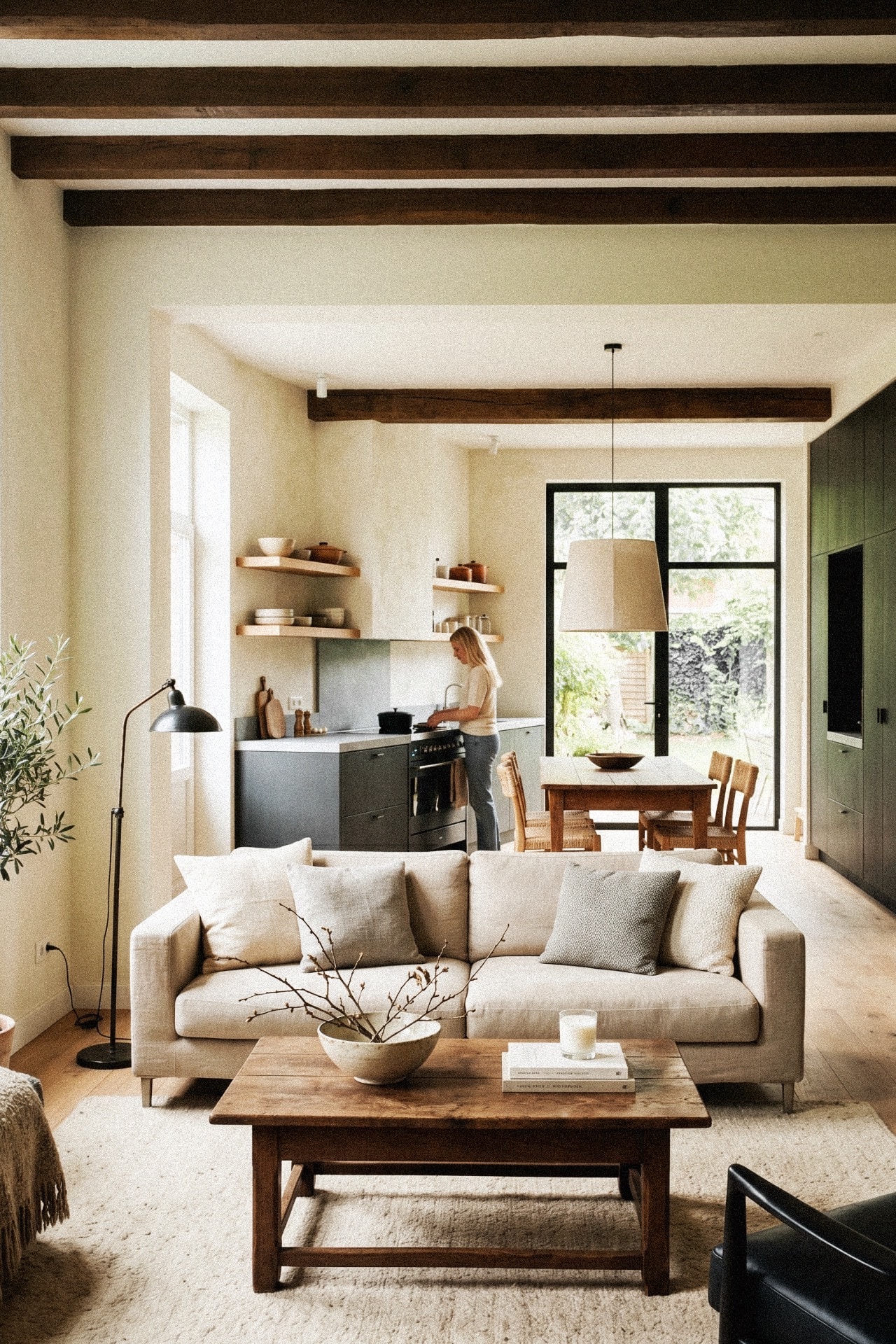
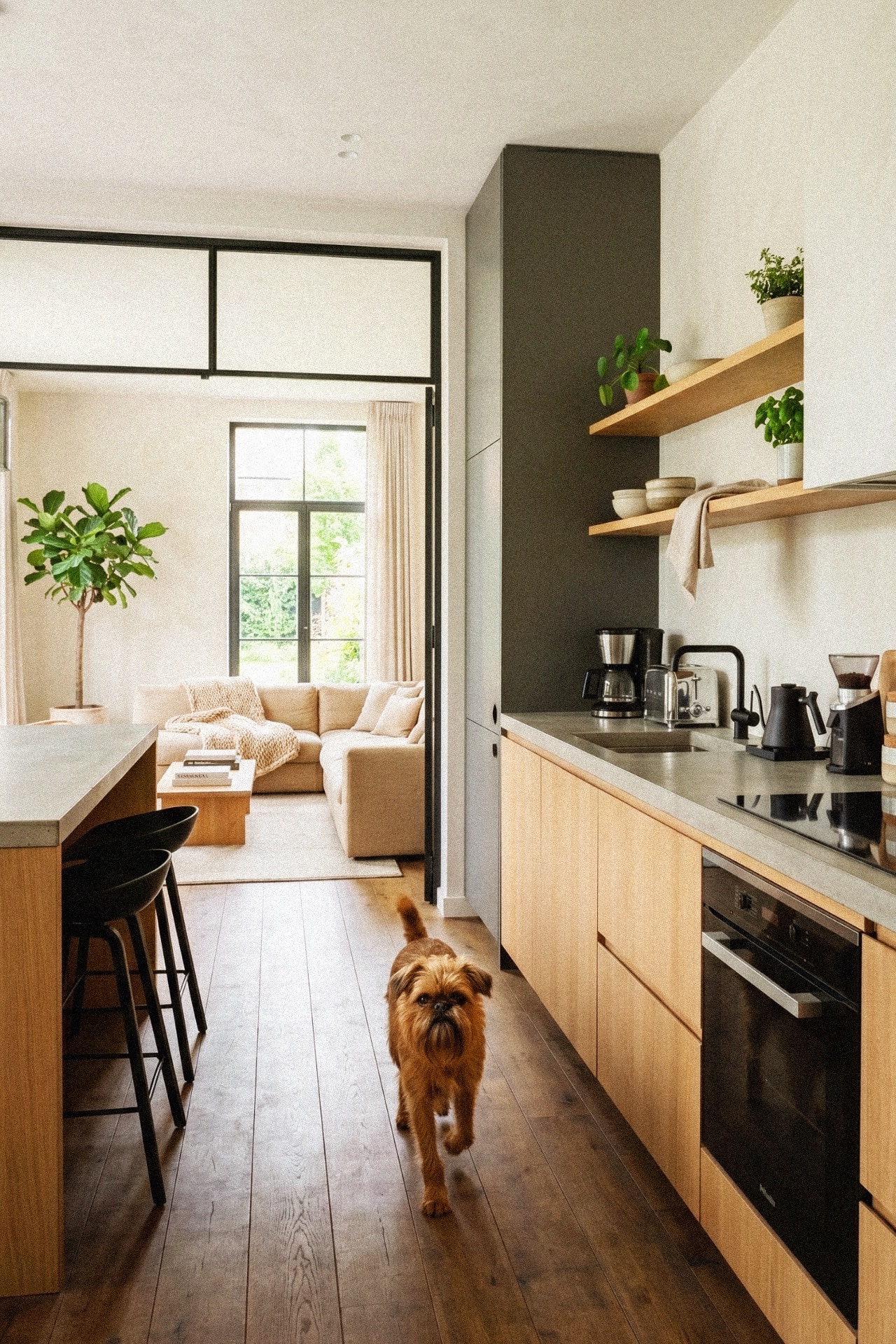
This style is quite quiet and does not try to impress anyone with shiny things. It is a mix of old architecture and very simple, modern furniture. The rooms feel large and empty, but they are not cold because the materials have a lot of texture and history.
The furniture pieces are often oversized but few in number. Instead of having many small chairs, a Belgian room will have one large, comfortable sofa covered in heavy linen. The layout gives each object a lot of space to breathe, making the room feel calm.
Materials are left in their natural state. You will see rough oak beams that are centuries old, walls finished with lime plaster, and large blocks of unpolished stone. There is a preference for things that are matte and absorb the light rather than reflecting it.
The colors are taken from nature on a cloudy day. Greys, beiges, and the color of wet mud are used on everything, creating a monolithic look where walls and furniture blend together.
Materials and textures: Belgian linen, reclaimed oak, lime plaster, matte bluestone, distressed leather, raw concrete, hammered iron
Spatial layout and form: symmetrical balance, oversized furniture scale, generous spacing, low horizontal lines, hidden storage doors, integrated stone niches, minimalist fireplaces
Colour palette: oatmeal, dove grey, charcoal, warm taupe, chalky beige, raw wood tint, slate grey
Details and decor: large ceramic vessels, hand-woven rugs, simple iron candle spikes, abstract textured canvases, dry branches, slipcovered seating, primitive wooden stools
Parisian Chic
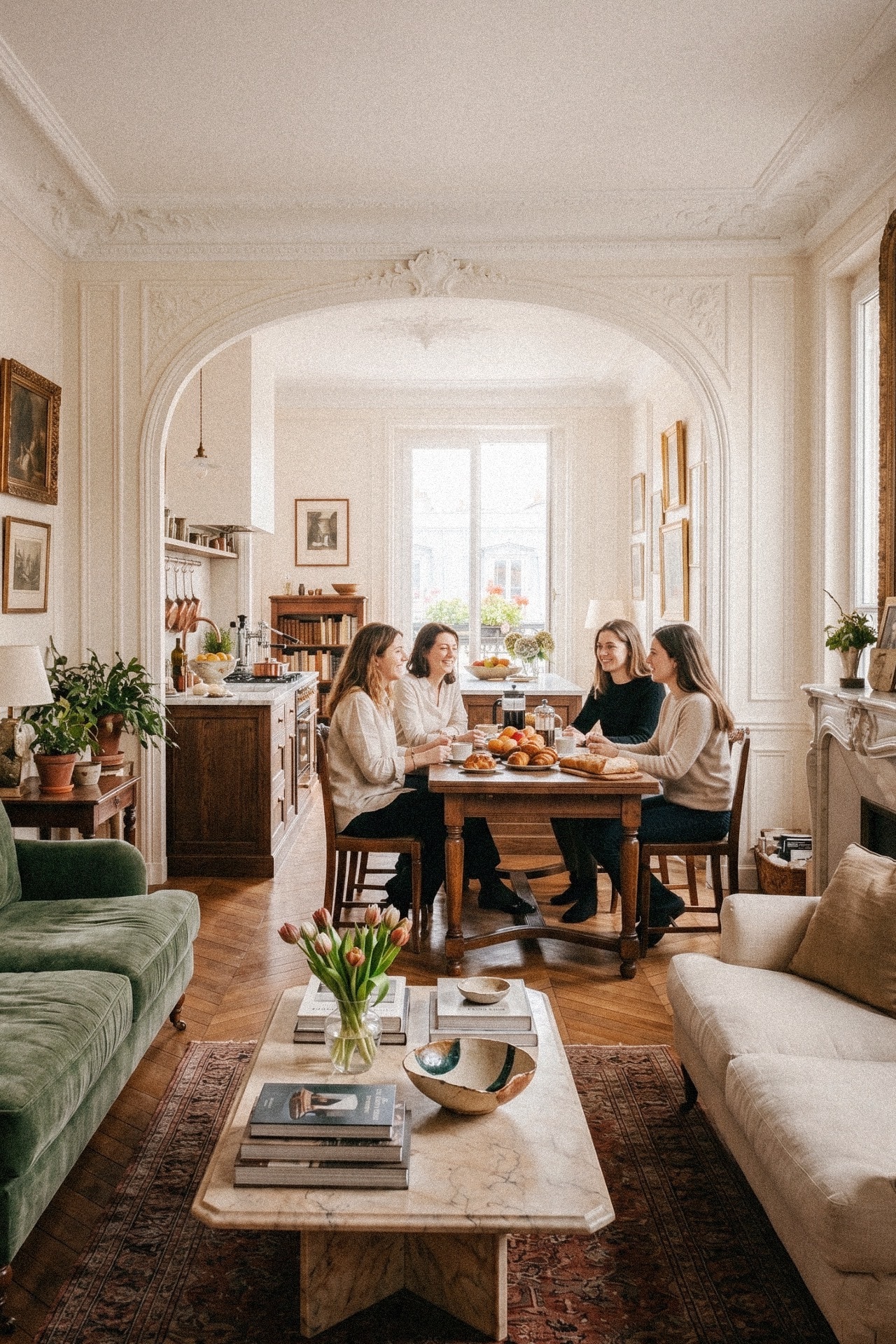
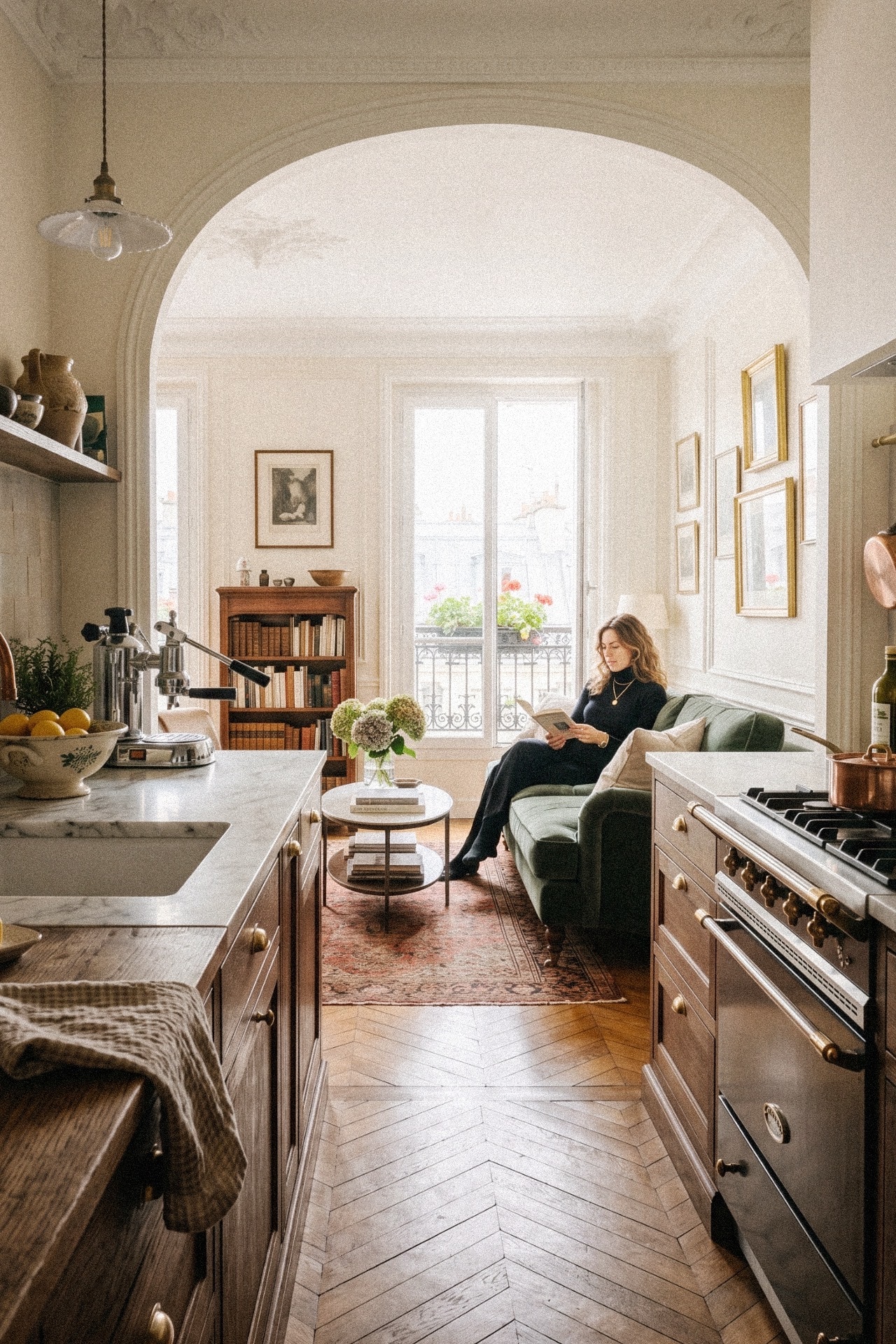
This is how people live in historic apartments in the center of Paris. The rooms have a lot of classic character from the nineteenth century, with high ceilings and elaborate plaster work on the walls. The modern style comes from how people mix these old elements with contemporary lifestyle.
The layout looks accidental but is done with care. A modern, minimalist sofa might sit directly on an old oak floor that creaks. Furniture is placed in a way that suggests conversation and reading rather than looking at a television screen.
The materials are a contrast between old luxury and modern utility. Heavy marble fireplaces serve as shelves for modern art, and brass details appear on both antique mirrors and modern lamps. The floors are almost always parquet laid in a zigzag pattern.
Colors are kept quiet on the large surfaces to let the architectural details show. White walls are standard, but they are combined with rich, dark tones in the velvet upholstery or the wood of a mid-century cabinet.
Materials and textures: herringbone parquet, white marble, gilded bronze, silk velvet, molded plaster, fine crystal, matte paint
Spatial layout and form: high-ceiling orientation, fireplace focal points, casual furniture angling, layered seating, floating mirrors, classic room proportions, conversational groupings
Colour palette: antique white, deep velvet black, muted emerald, dusty rose, brass gold, smoky glass tint, Parisian grey
Details and decor: ornate wall moldings, oversized gilded mirrors, contemporary oil paintings, sculptural floor lamps, stacked vintage books, sheer linen curtains, marble mantelpieces
French Provincial
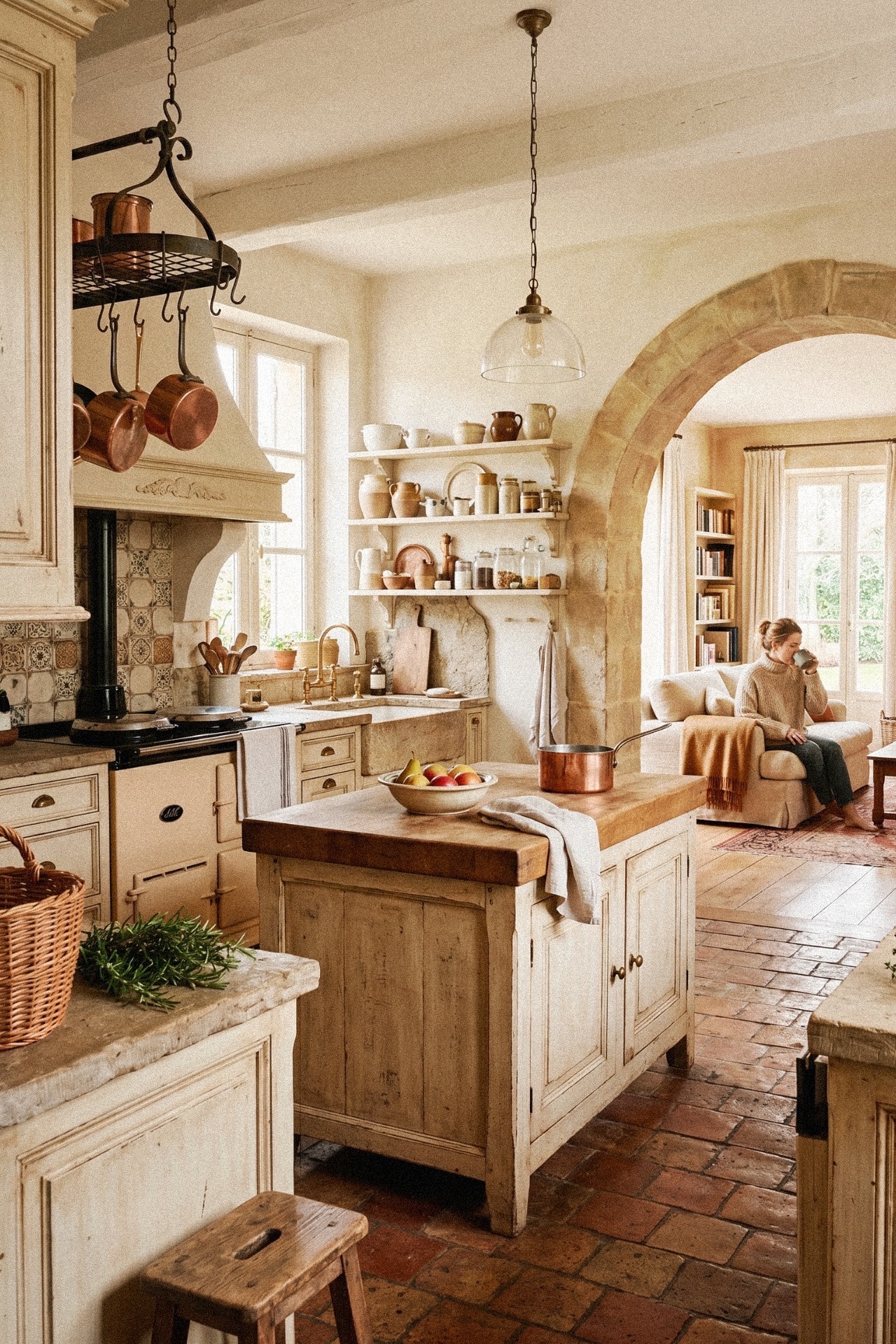
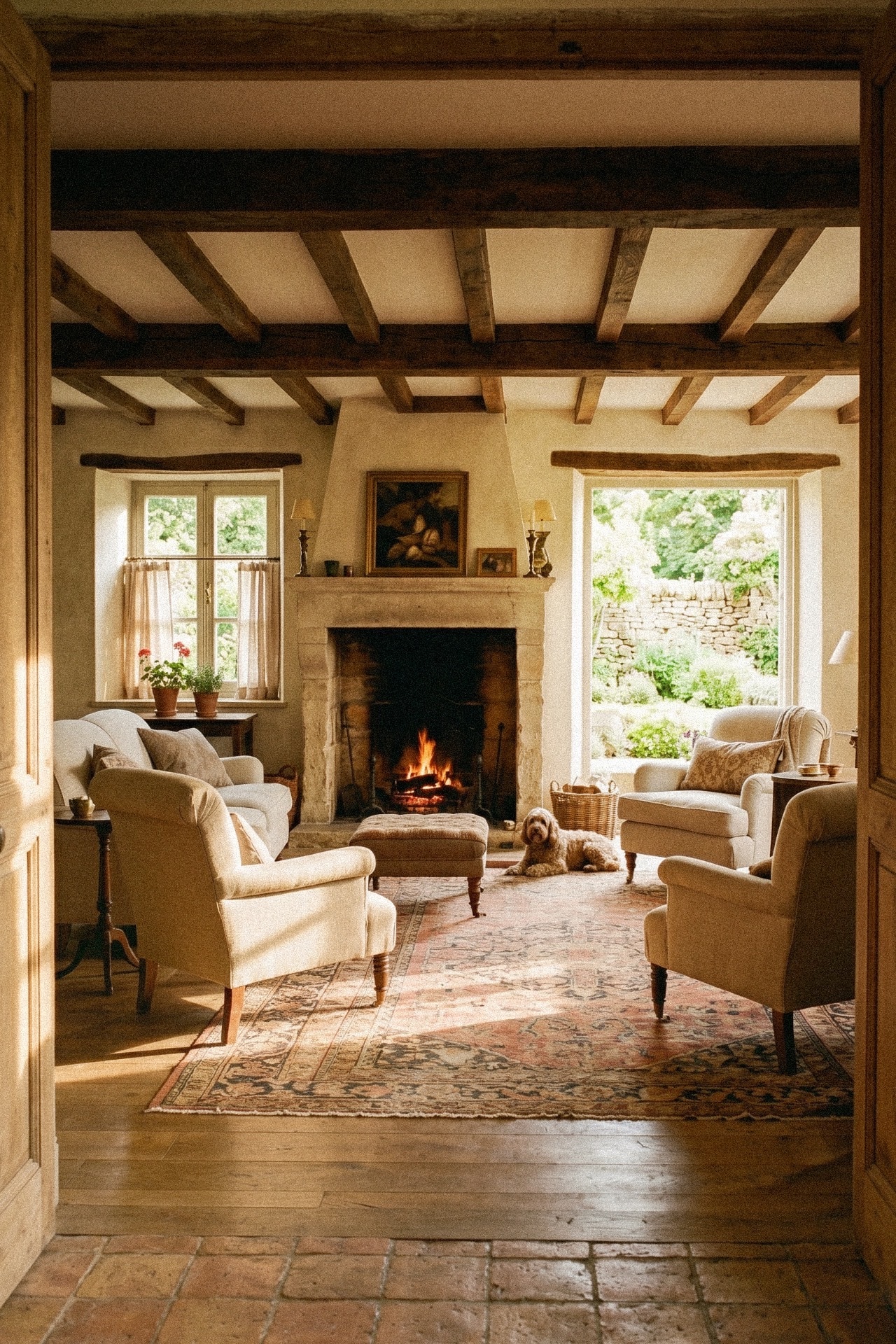
This style belongs to the countryside, far away from the city apartments. It is based on the traditional farmhouses of southern France, where life moves slower and furniture needs to last for several generations. It is rustic but has a certain softness that makes it comfortable.
The layout centers around the kitchen or a large dining table where the family eats. Storage is provided by large, freestanding wooden wardrobes instead of modern built-in closets. The furniture is arranged to handle heavy daily use by a large family.
Wood is usually oak or walnut, often painted in light, dusty colors and then rubbed down to look old and weathered. Wrought iron is used for bed frames and light fixtures, giving a sturdy structure to the rooms.
Textures are rough and practical. Terracotta tiles are common on the floor because they stay cool in summer and are easy to wash after working in the garden. Cotton fabrics with simple country checks or small floral prints add a bit of colour.
Materials and textures: weathered oak, terracotta tiles, wrought iron, linen-cotton blends, whitewashed stone, glazed earthenware, glazed brick
Spatial layout and form: farmhouse kitchen focus, freestanding cabinetry, central dining arrangement, deep window sills, sturdy proportions, symmetrical facades, casual storage solutions
Colour palette: lavender blue, sunflower yellow, sage green, soft cream, terracotta red, antique white, muted olive
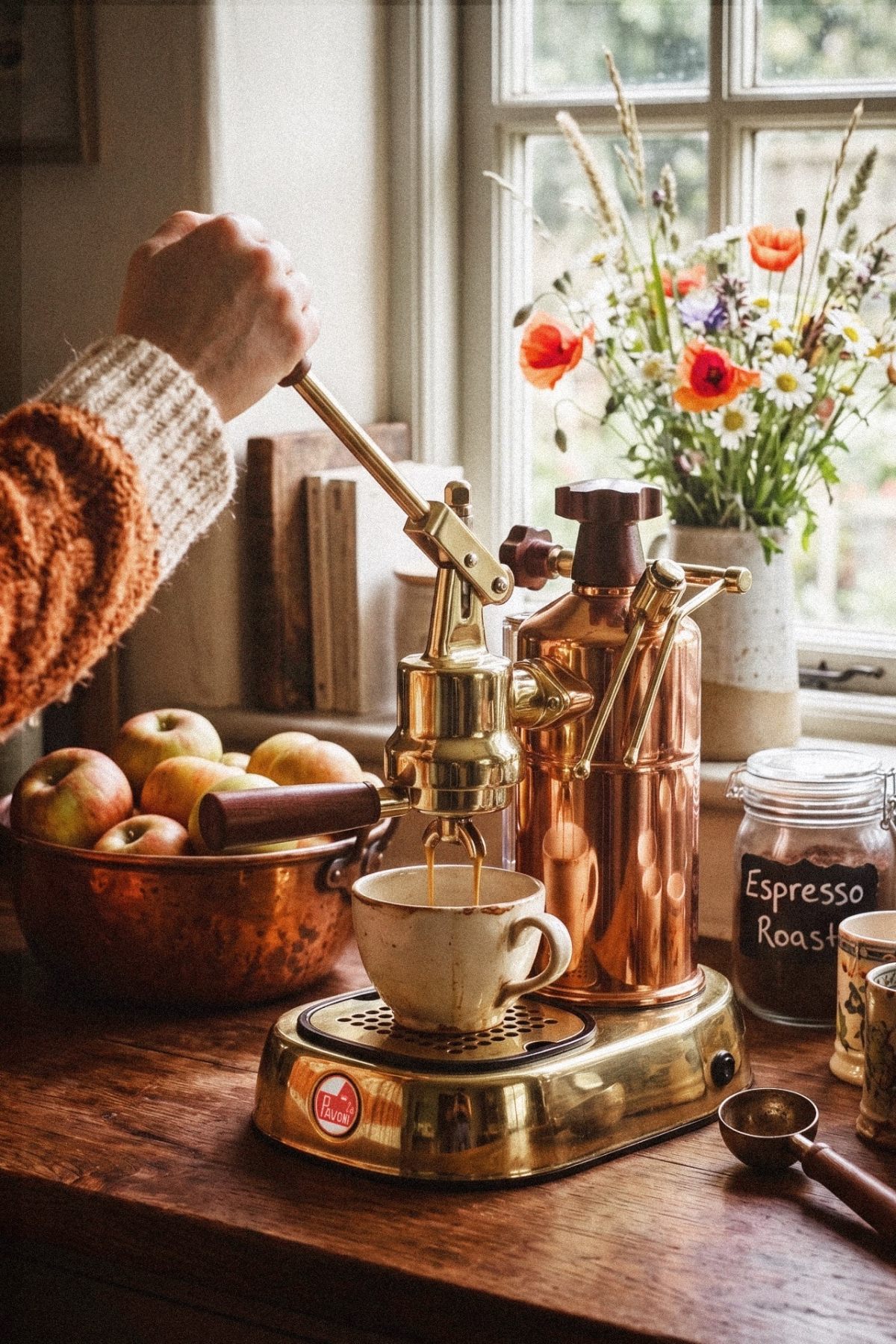
Details and decor: copper pots on display, ceramic pitchers, wicker baskets, linen table runners, wrought-iron chandeliers, open kitchen shelving, dried lavender bouquets
English Country House
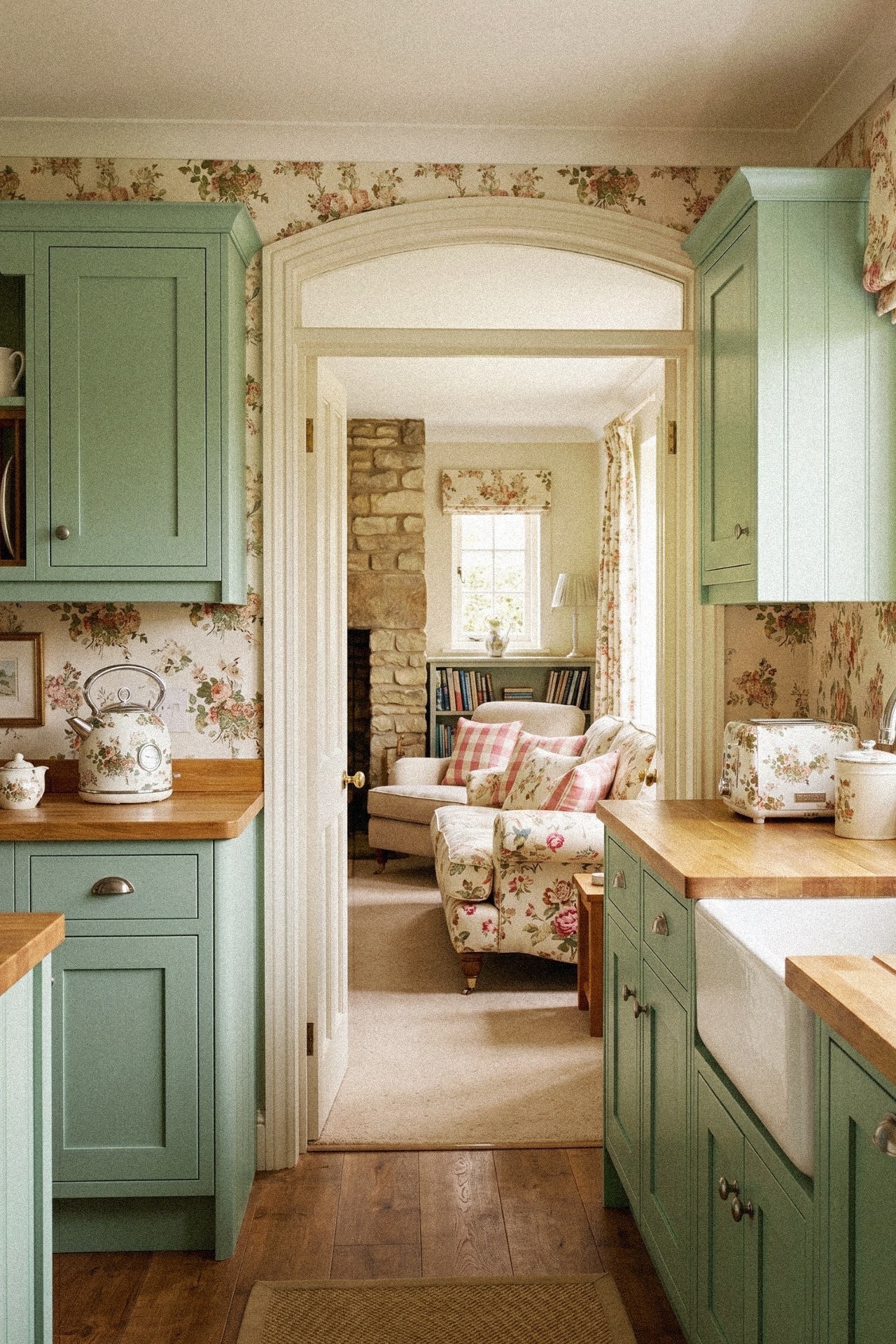
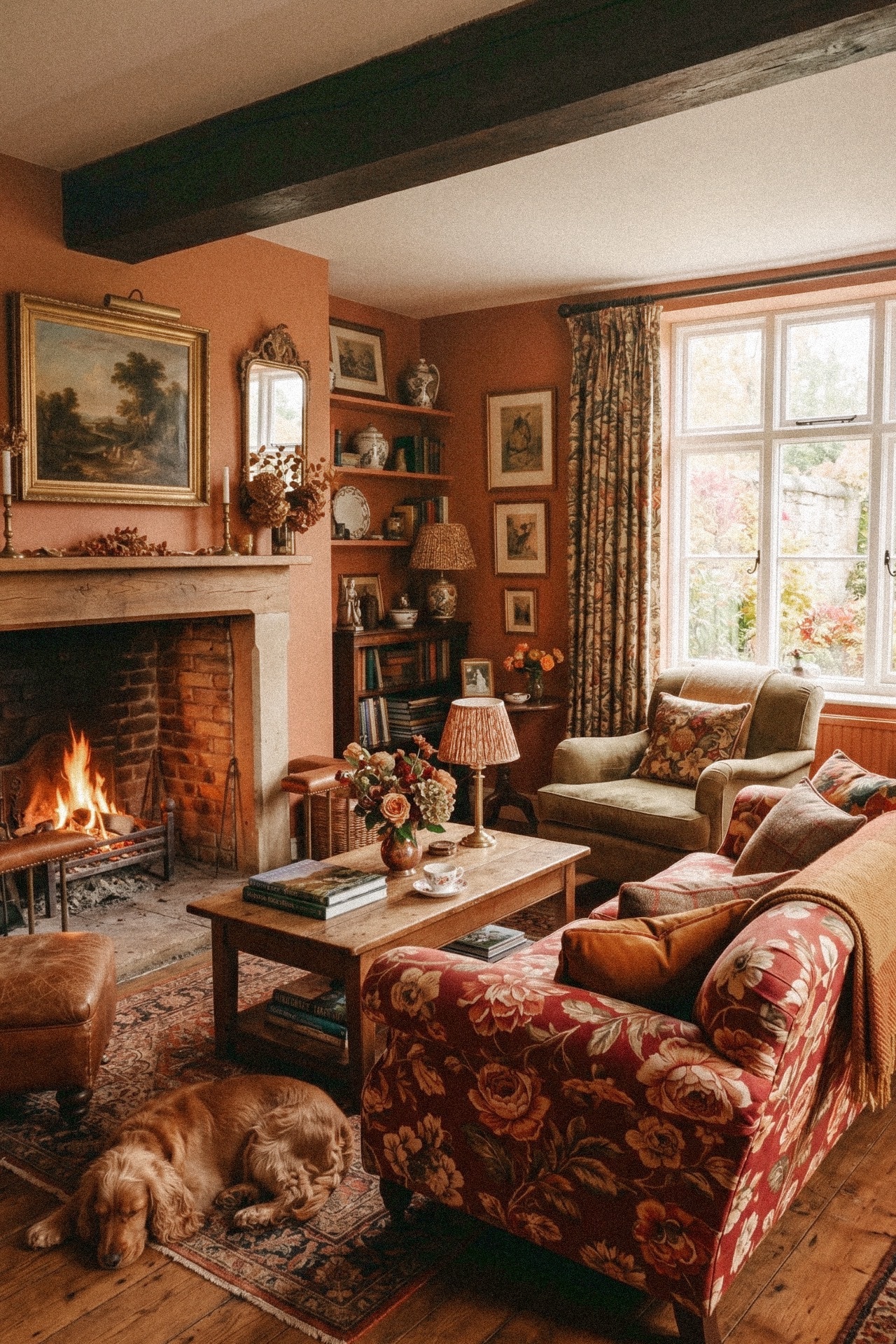
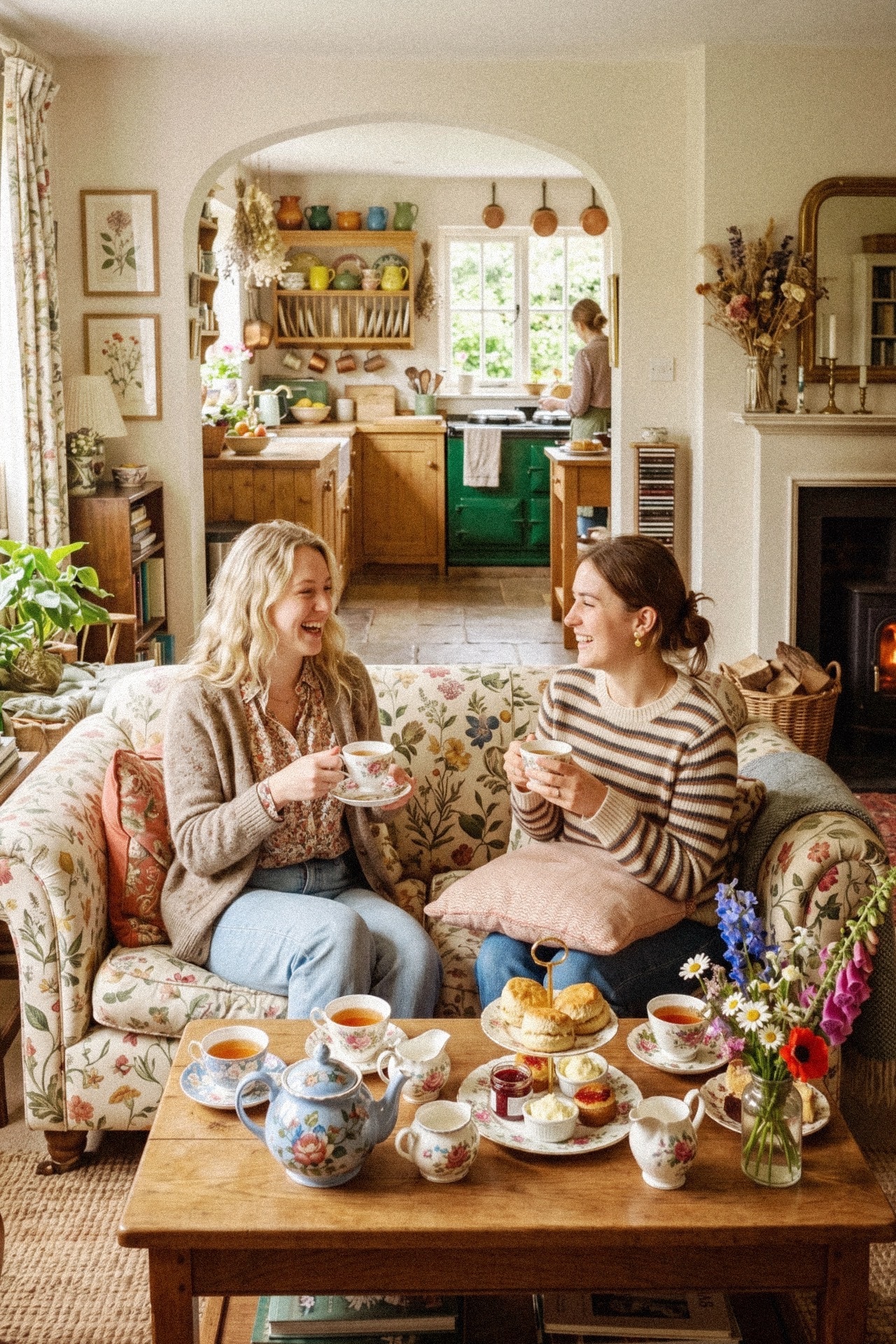
An English country room is never finished and it is never entirely tidy. It looks as if people have been collecting things for two hundred years and just putting them wherever there was an empty space. It is a very layered and comfortable style that does not care about modern design trends.
The layout is crowded but cozy. Sofas are deep and filled with cushions, often placed close to an open fireplace. There are many small tables next to chairs to hold tea cups, books, and lamps. It is designed for rainy days indoors.
The fabrics are the most important part. Chintz with large flower patterns, wool tartan, and heavy velvet are all used in the same room. Nothing matches perfectly, which is exactly why it works. It looks human and lived-in.
Furniture is mostly dark wood like mahogany or walnut, showing scratches and polish from many years of use. Walls are often covered in patterned wallpaper or painted in deep, historical colors that look good by lamplight.
Materials and textures: dark mahogany, wool tartan, floral chintz, worn leather, polished brass, tufted velvet, sisal carpeting
Spatial layout and form: dense furniture clustering, fireside seating, library walls, perimeter lamp lighting, low coffee tables, nested side tables, deep-seated sofas
Colour palette: hunter green, crimson red, mustard yellow, deep mahogany brown, tea stain beige, old gold, duck egg blue
Details and decor: oil portraits, landscape paintings, ceramic table lamps, patterned wallpaper, landscape rugs, brass firewood buckets, rows of old books
Italian Modern
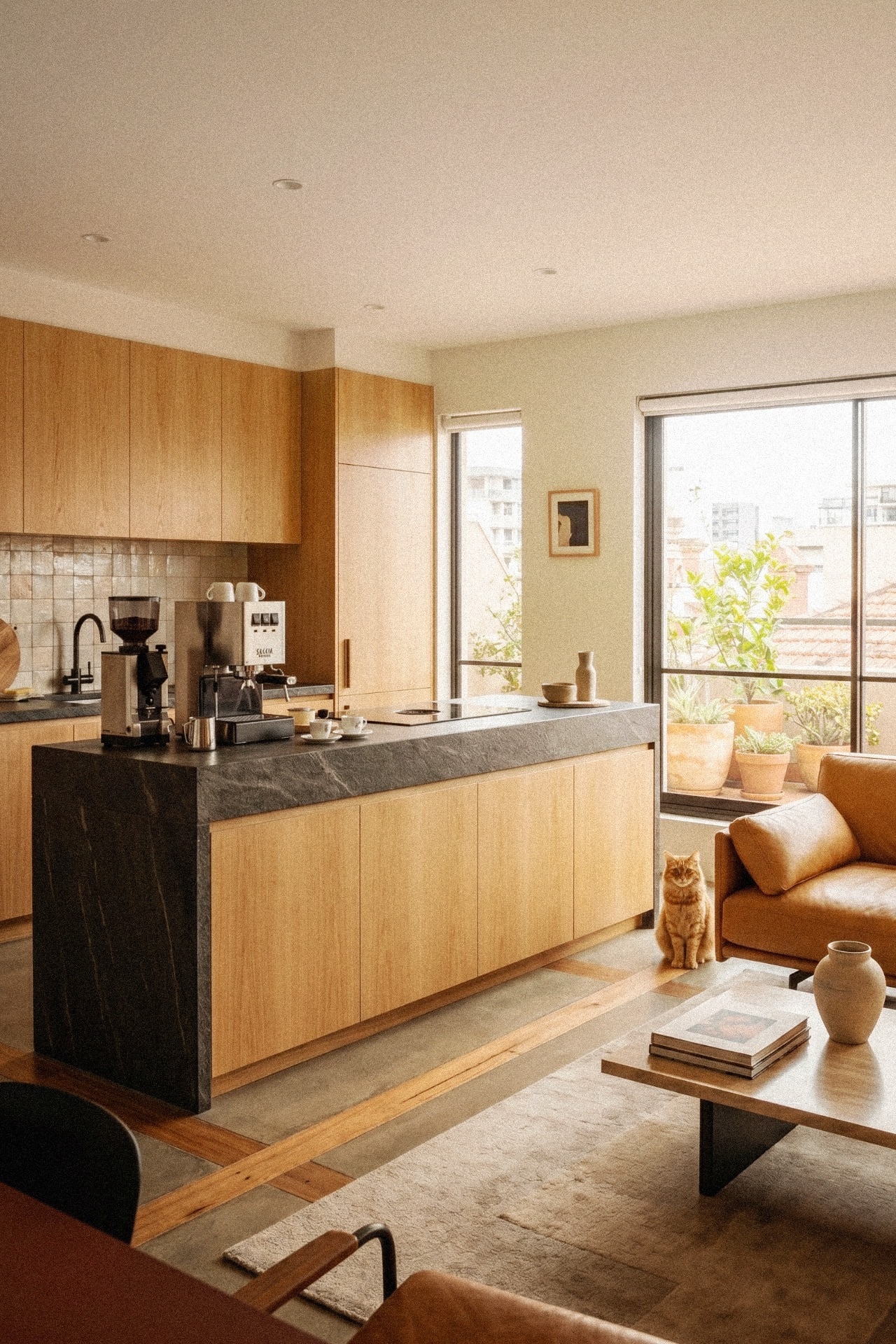
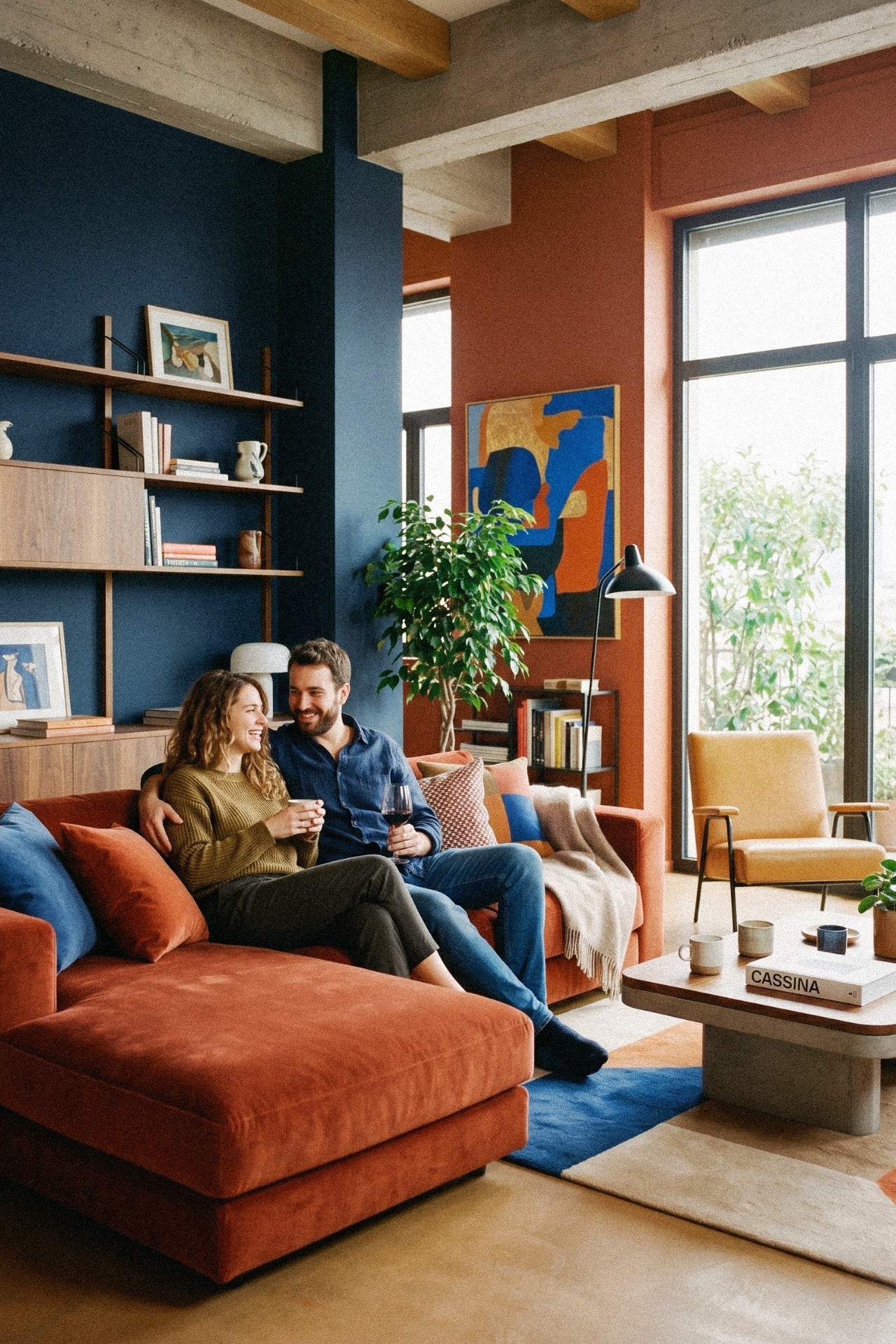
This style comes from the design studios of Milan and is about high-end manufacturing and sharp tailoring. It is very sleek and low-profile. The furniture does not look like it was made by a carpenter; it looks like it was engineered in a high-tech factory.
The layout is spacious and dramatic. Each piece of furniture is a sculpture on its own, so it needs space around it. Sofas are long and sit low to the ground, making the ceilings feel higher than they are.
The materials are expensive and polished. Dark marble with heavy veins, shiny chrome, lacquered wood, and very fine leather are standard. Everything feels smooth to the touch, and there are no rough edges or rustic imperfections.
Colors are often neutral but with sudden, confident blocks of color. A room might be mostly grey and black, but with one bright orange leather armchair or a polished green marble table to show that the owner has bold taste.
Materials and textures: polished marble, top-grain leather, high-gloss lacquer, brushed chrome, tinted glass, tinted mirror, tight-weave wool
Spatial layout and form: low-slung profiles, wide horizontal layout, floating television benches, architectural lighting, asymmetrical balance, floating room dividers, minimalist wall units
Colour palette: charcoal grey, stark black, bright tan leather, emerald marble, pure white, burnt orange, deep navy
Details and decor: arching floor lamps, minimalist glass vases, monochrome silk rugs, hidden LED strips, abstract sculpture pieces, frameless mirrors, designer coffee table books
Tuscan
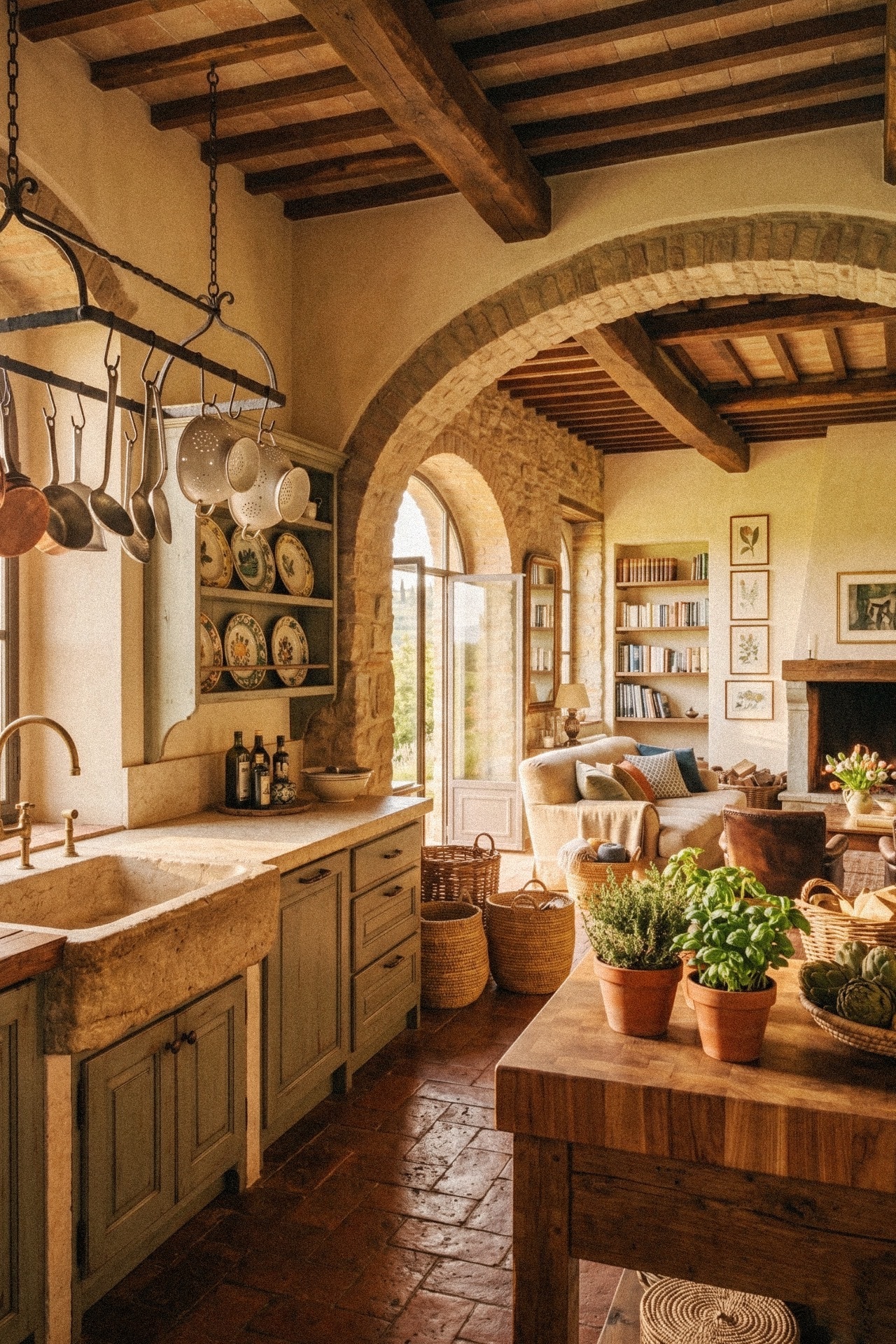
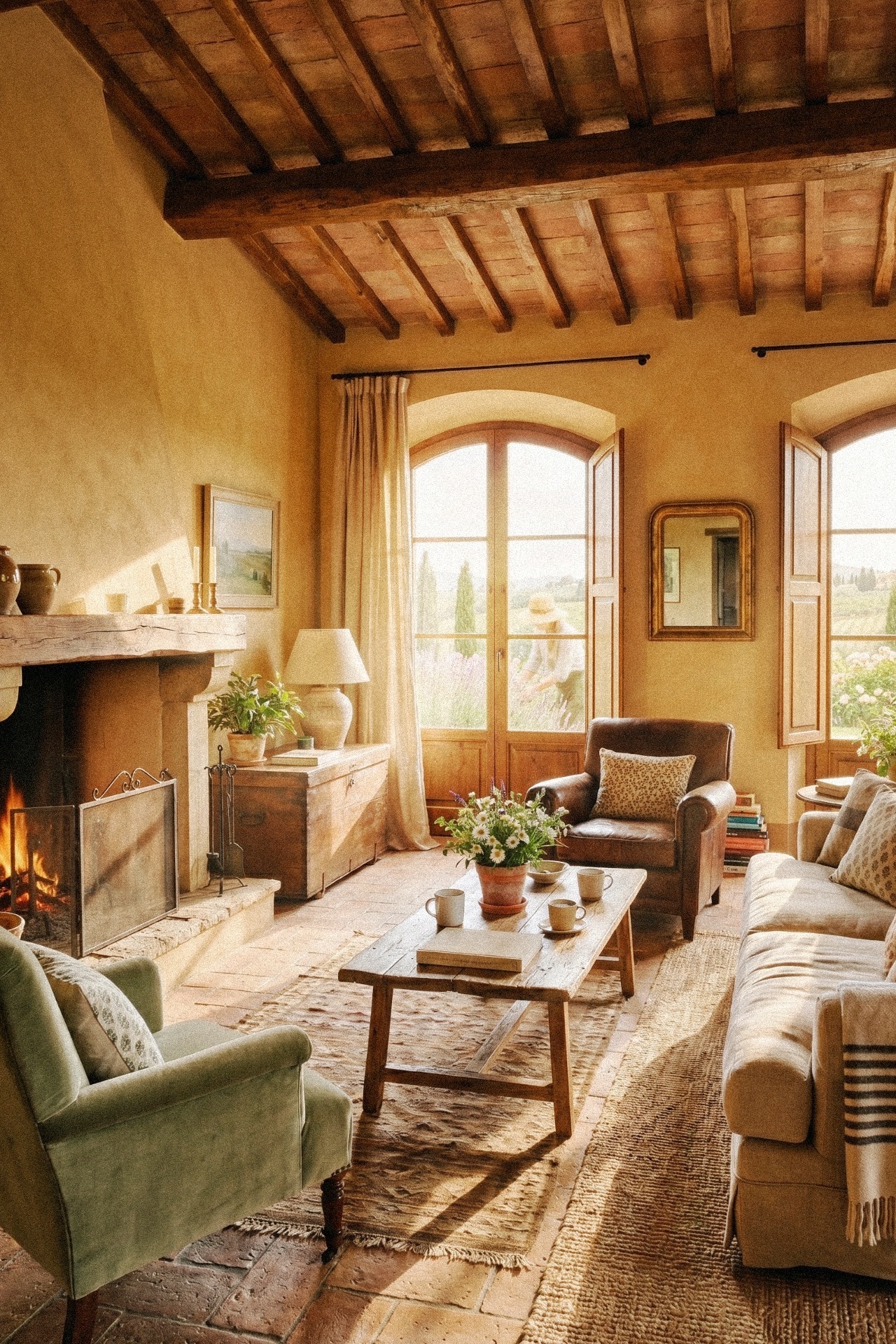
This style belongs to the agricultural hills of central Italy. It is a warm, dry aesthetic that feels connected to the earth and the sun. The rooms are designed to stay cool during the hot Mediterranean afternoon, with thick stone walls and shaded windows.
The layout is simple and unpretentious. The furniture is heavy and rustic, made from local timber like chestnut. It is placed along the walls to keep the center of the room open and airy, which helps with the indoor temperature.
Terracotta is the main floor material, usually unglazed and showing variation in colour from the baking process. Walls are finished with rough plaster that is tinted with natural pigments like ochre and sienna, giving them a warm glow even on a cloudy day.
Textiles are heavy and functional, like coarse linen and plain hemp sacks. There is very little decoration that does not have a purpose in a rural house, so the beauty comes from the quality of the stone and wood.
Materials and textures: unglazed terracotta, chestnut wood, rough stone, lime wash plaster, wrought iron, coarse hemp, travertine stone
Spatial layout and form: thick architectural walls, exposed ceiling beams, open central floors, arched stone openings, heavy base furniture, deep window recesses, simple geometry
Colour palette: burnt ochre, raw sienna, olive green, brick red, warm cream, dusty brown, cypress green
Details and decor: ceramic olive oil jars, wrought-iron wall sconces, simple wooden benches, linen window panels, copper basins, stone herb mortars, simple wooden crosses
Spanish Revival
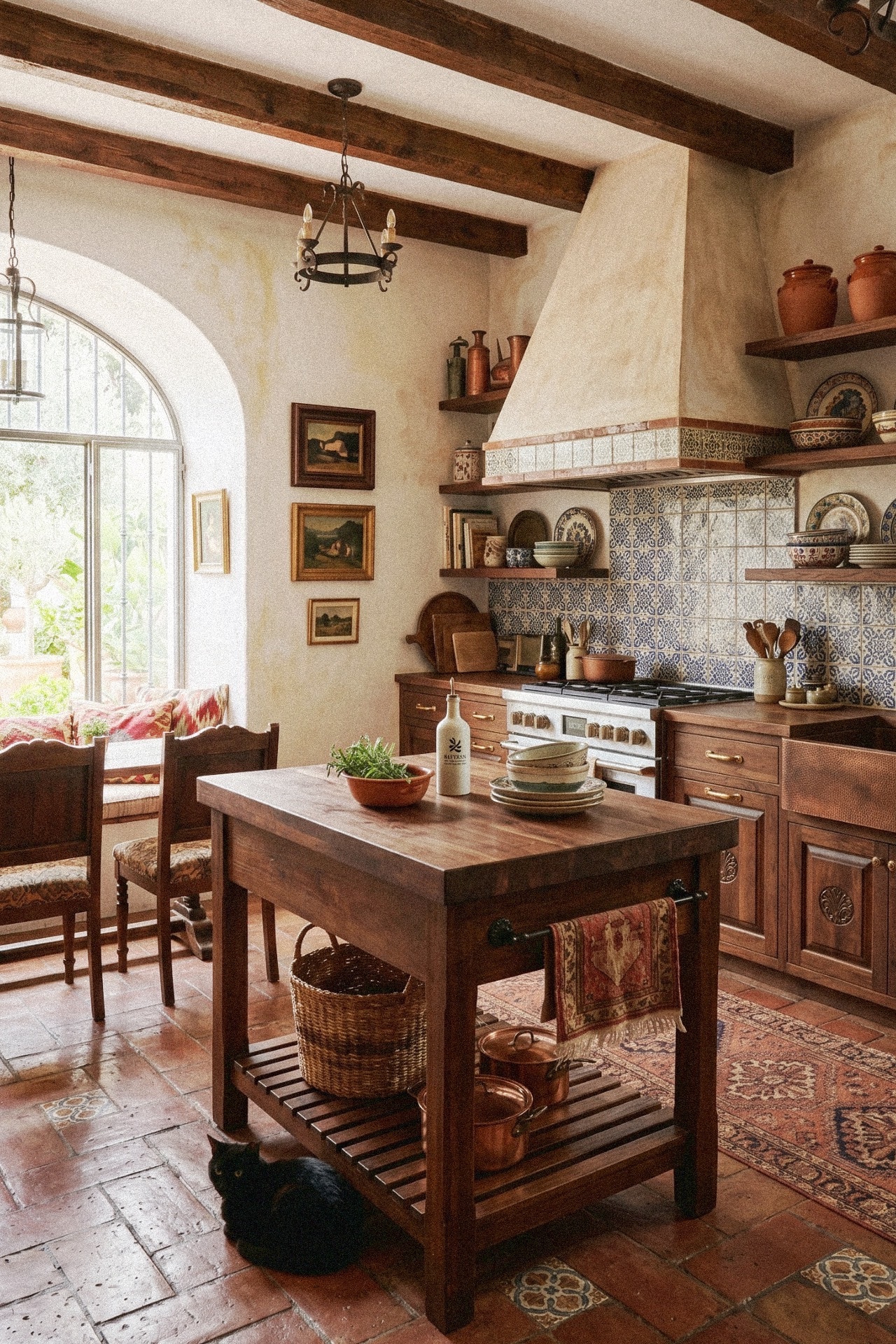
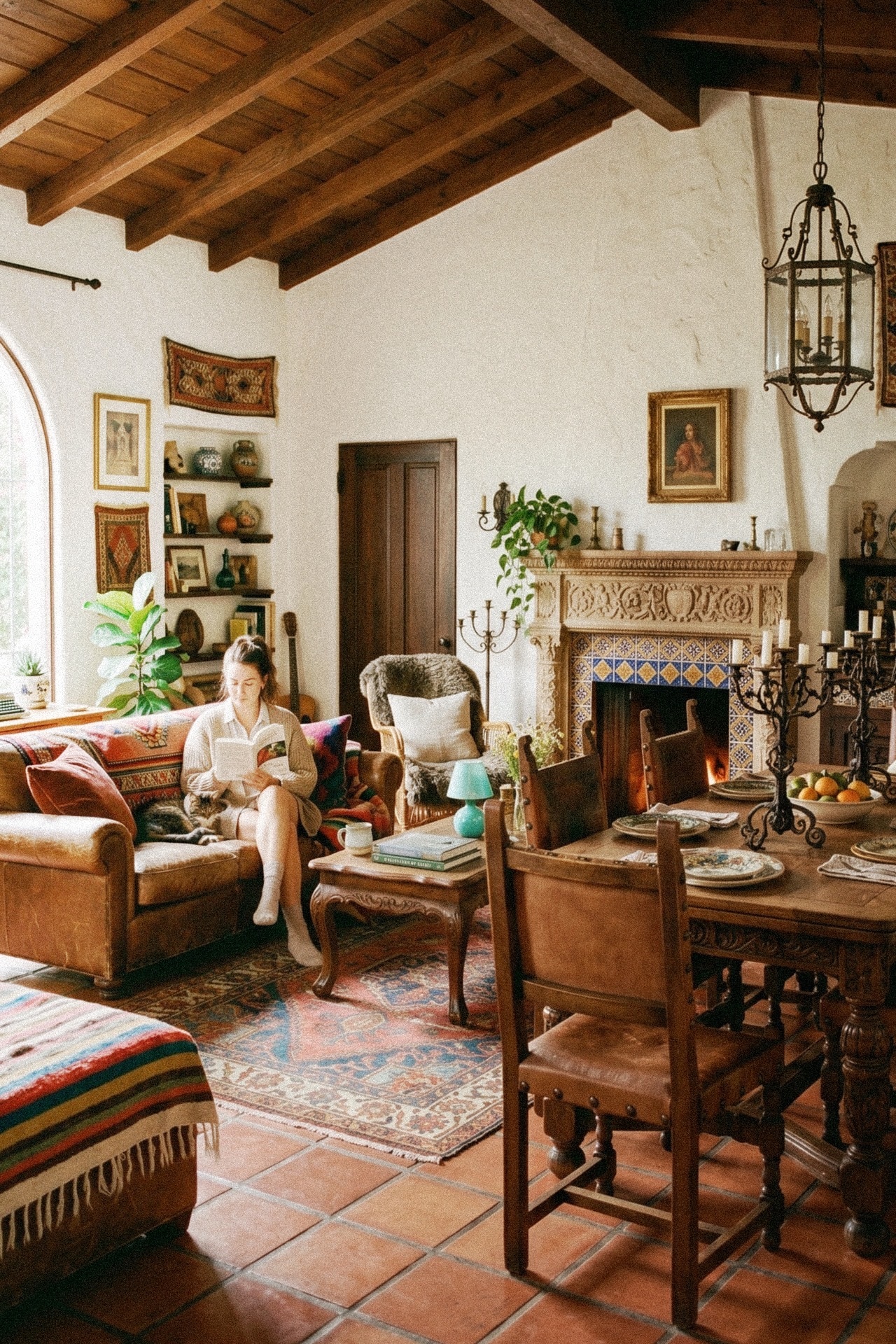
This style combines old Mediterranean architecture with heavy, decorative elements from Spain’s history. The interiors are dramatic because of the contrast between the plain, white walls and the very dark, carved wood furniture.
The layout features heavy individual pieces that dominate the space. Arched doorways and tiled corridors connect the rooms, creating a sense of movement through a cool interior layout. The furniture is arranged to face away from direct window light.
Dark walnut and oak are carved with geometric patterns, often used for heavy tables and storage chests. Wrought iron is used decoratively for window grilles, stair railings, and large chandeliers that cast heavy shadows on the walls.
Brightly colored ceramic tiles with Moorish patterns are used on stair risers, floors, and kitchen walls. They provide small explosions of color against the simple stucco surfaces of the house.
Materials and textures: rough stucco, dark walnut, hand-painted ceramic, wrought iron, red quarry tiles, heavy leather, carved timber
Spatial layout and form: arched passageways, heavy furniture anchoring, corridor transitions, courtyard integration, high small windows, timber-beamed ceilings, alcove recesses
Colour palette: cobalt blue, deep terracotta, stark white, walnut brown, sunflower yellow, olive green, iron black
Details and decor: hand-painted tile borders, wrought-iron gates, carved wooden chests, religious colonial art, heavy iron candlesticks, leather-bound chairs, decorative wall plates
Greek Cycladic
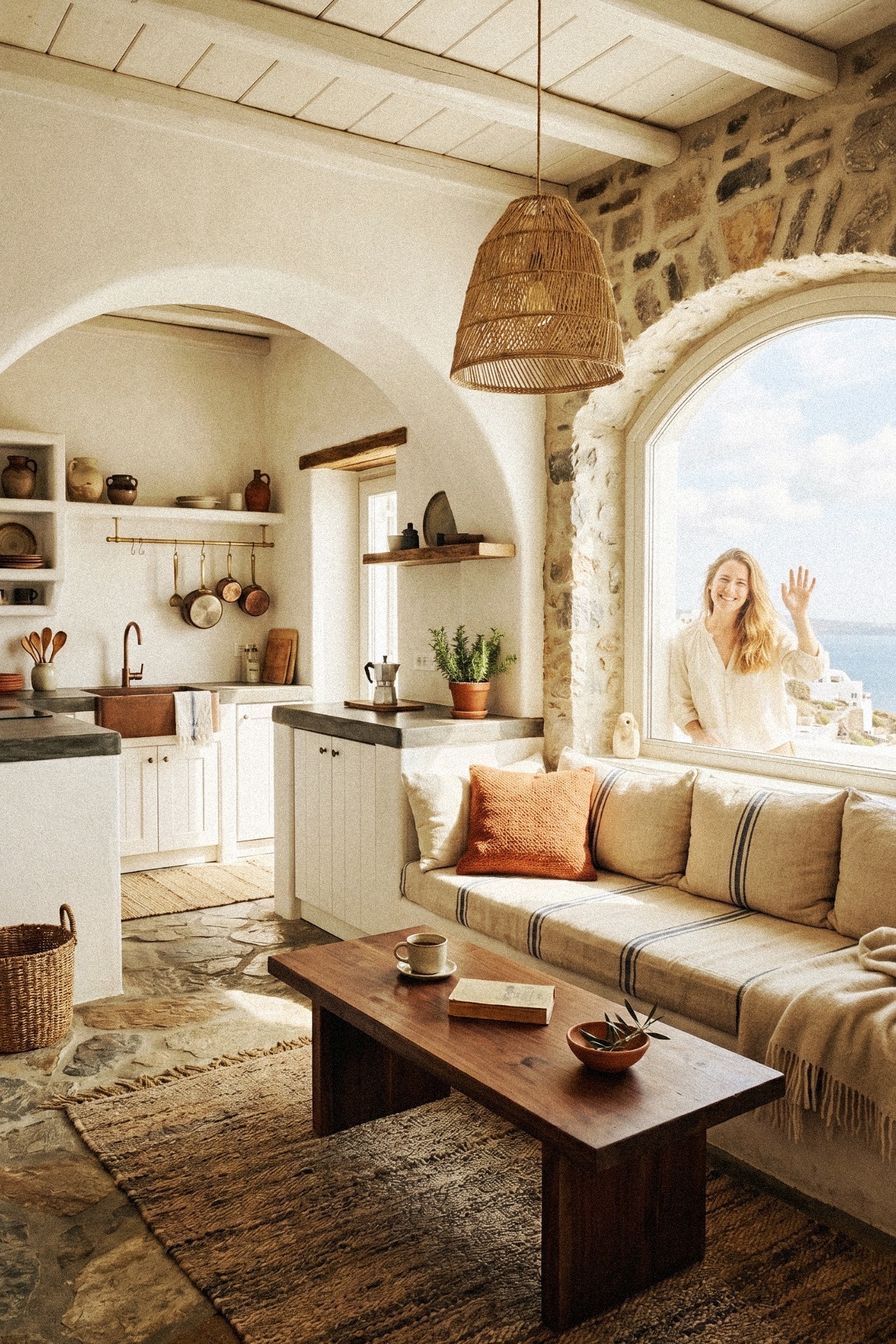
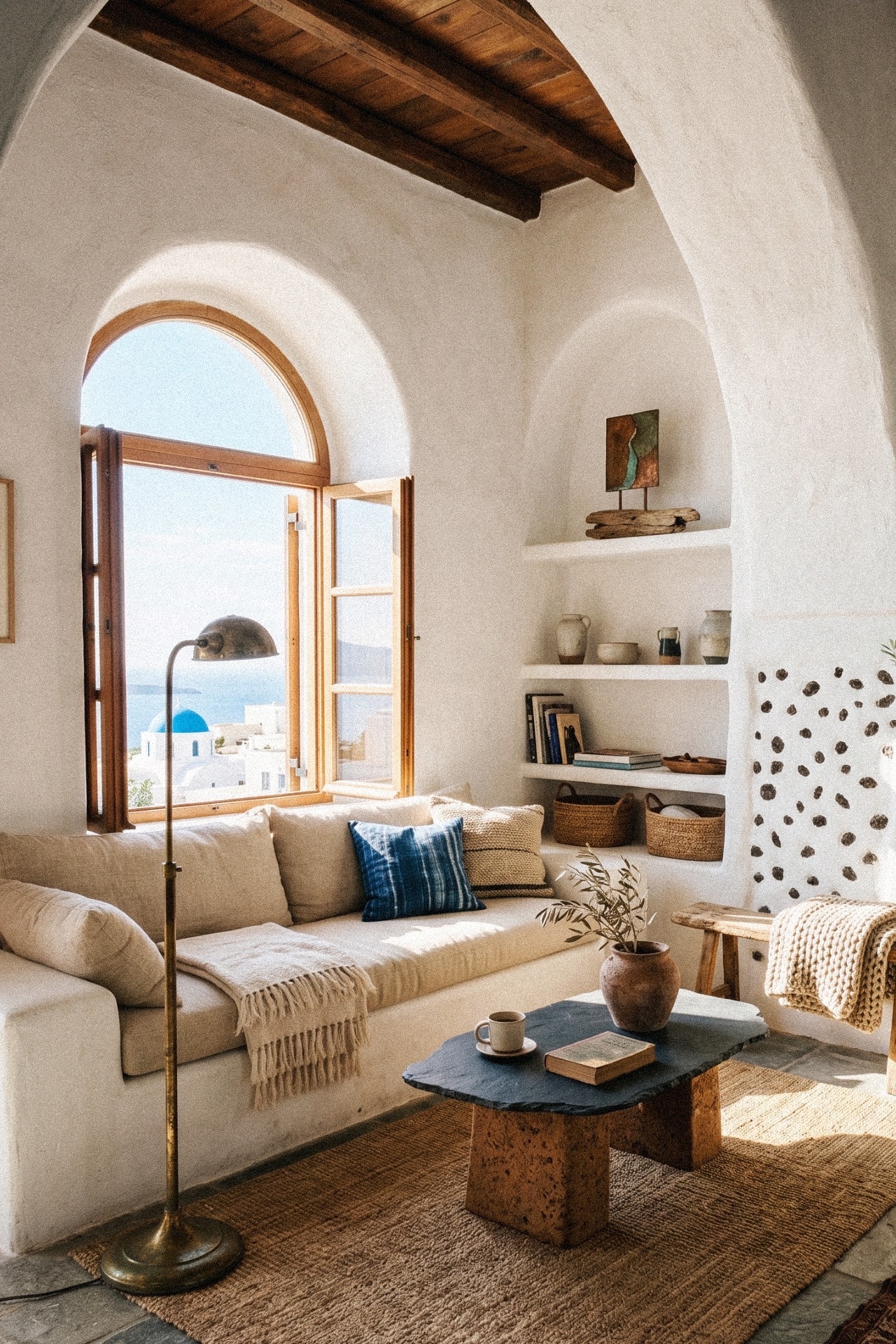
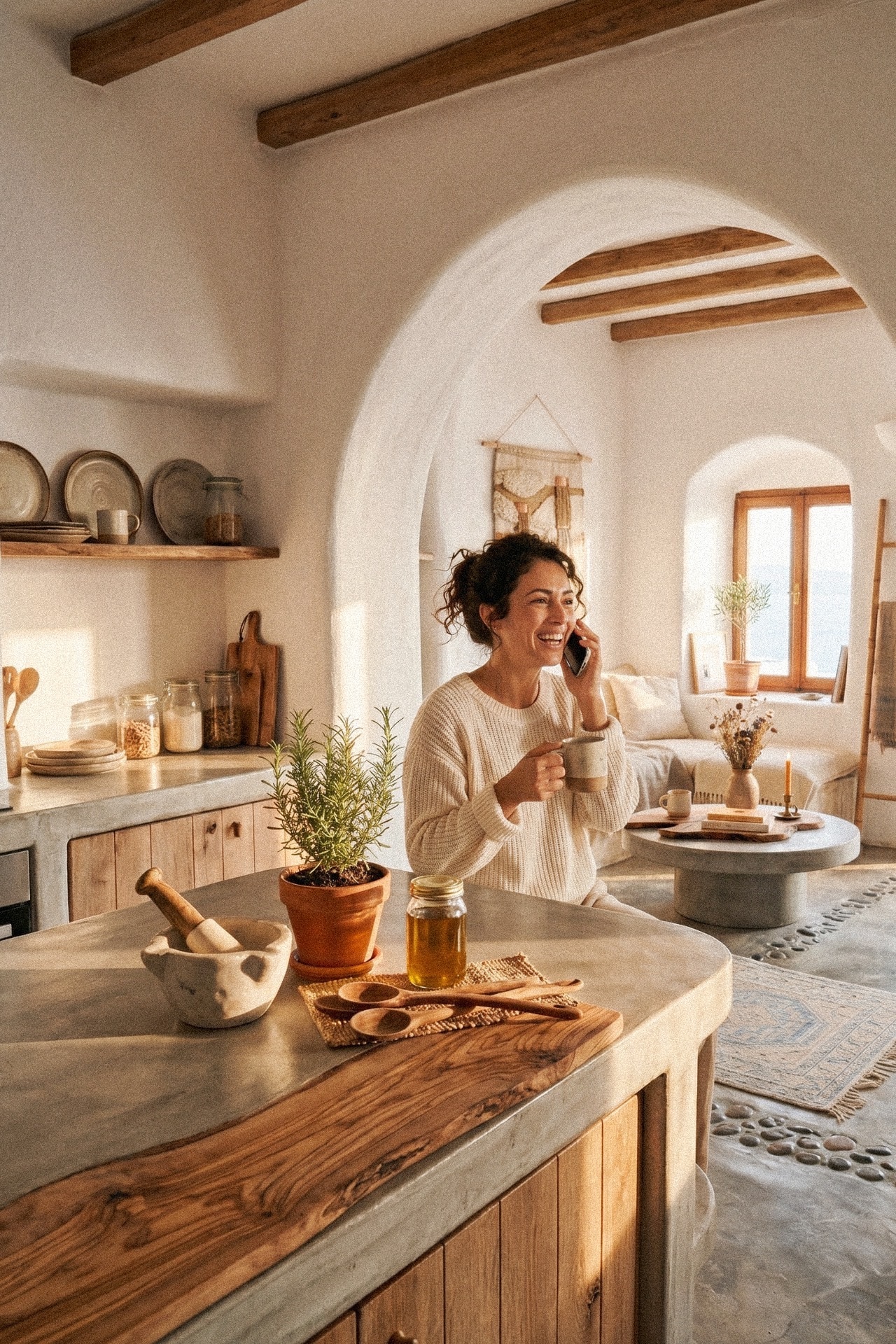
This is the most minimalist style of the Mediterranean, found on the islands of the Aegean Sea. The houses are built from local stone and covered in thick layers of white plaster, both inside and out. The architecture has almost no straight lines; everything is rounded and soft.
The layout is unique because much of the furniture is built directly into the structure of the house. Beds, sofas, and shelves are sculpted out of stone and plaster, then covered with cushions. This leaves very little need for wooden furniture.
The material list is very short. Plaster, stone, and a bit of pale driftwood are all you see. The surfaces are rough and show the marks of the human hands that shaped them, giving the rooms an organic quality.
White is the only color that matters, used to reflect the intense summer sun. Blue is used on doors, window frames, and occasional textiles to match the sea outside. It is a very clean, salt-shaker way of living.
Materials and textures: hand-molded plaster, smooth sea stone, washed timber, light linen, braided reed, white cement, lime paint
Spatial layout and form: built-in stone beds, rounded wall corners, sculpted alcoves, split-level floors, low organic archways, sparse furniture count, integrated wall shelves
Colour palette: Aegean blue, pure whitewash, sea salt white, sandy beige, driftwood grey, pale sky blue, stone grey
Details and decor: simple blue shutters, woven reed mats, clear glass bottles, plain linen cushions, ceramic water jugs, sea shells, minimalist white cotton drapes
Industrial Berlin
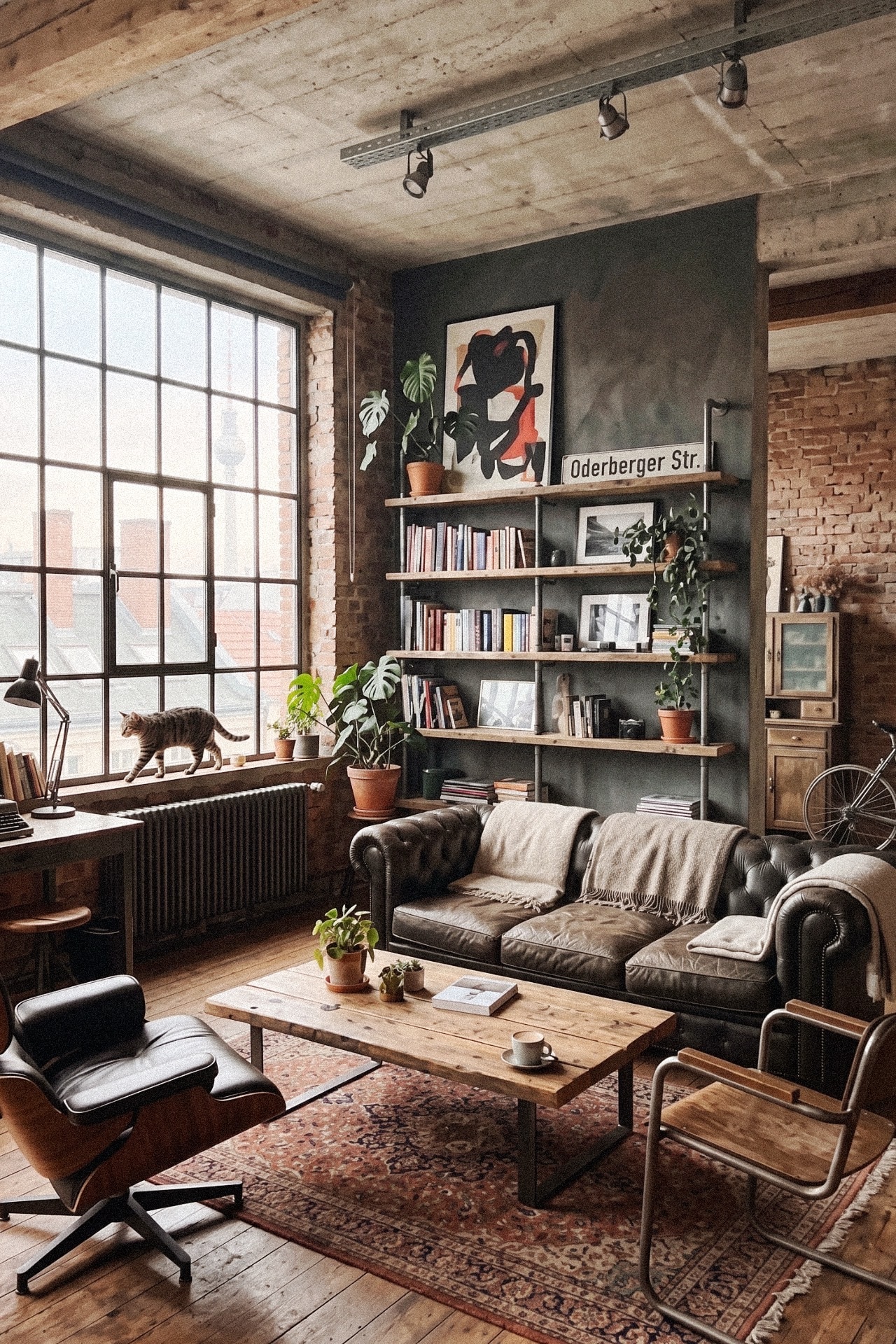
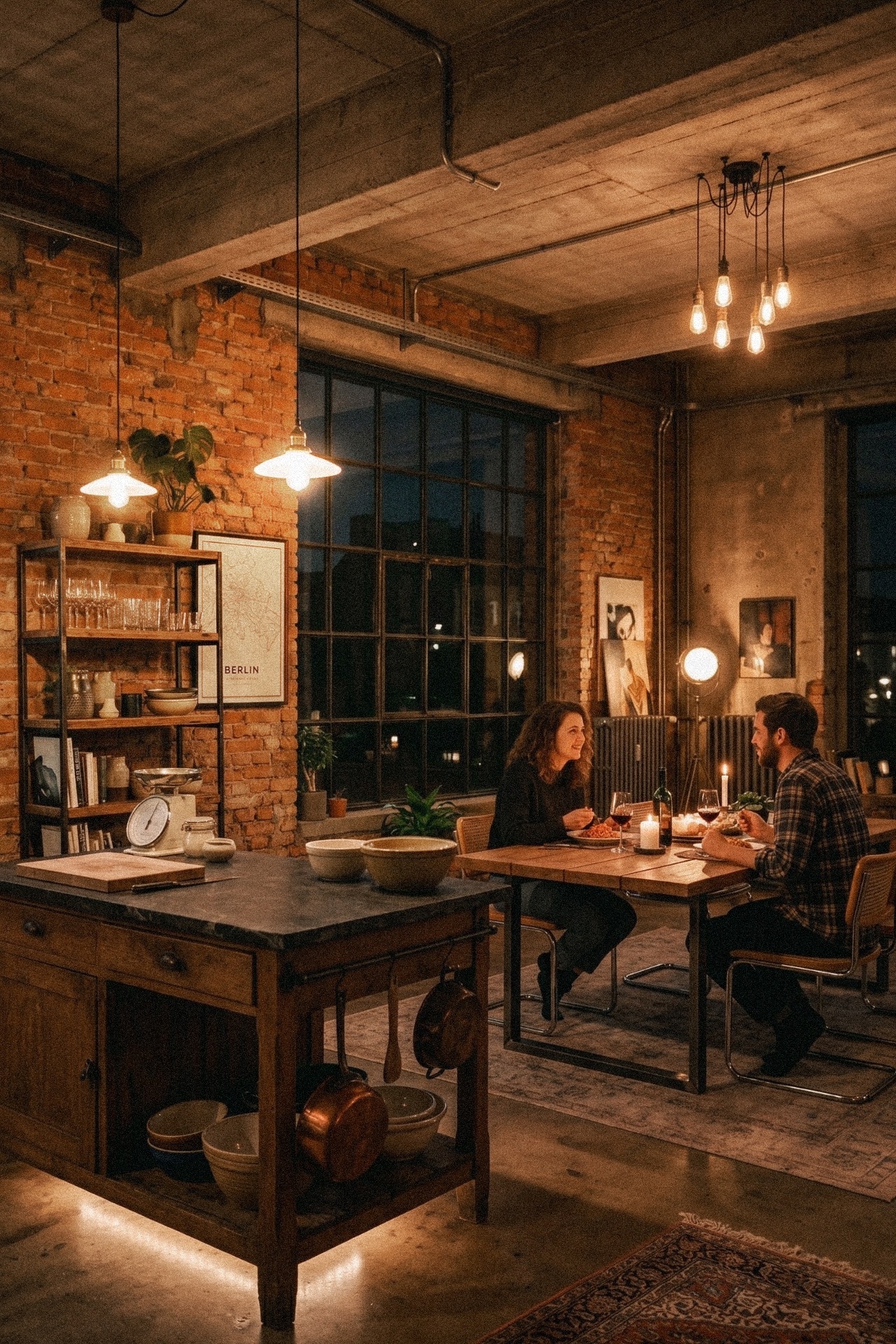
This style developed after the reunification of the city, when artists and musicians moved into abandoned factories and warehouses. It is a gritty, urban way of living that does not try to hide the industrial past of the building.
The layout is completely open, based on the classic loft apartment. Walls are rare; instead, different zones for sleeping, cooking, and living are defined by furniture placement or iron-framed glass partitions.
Raw materials dominate the space. Exposed brick walls, concrete pillars with old factory markings, and floors made of industrial screed or rough scaffolding planks are left uncovered. Everything looks a bit unfinished and durable.
Furniture is a mix of vintage industrial pieces, like steel filing cabinets and old workbenches turned into dining tables, combined with simple modern sofas. The colors are dark and metallic, reflecting the urban landscape outside.
Materials and textures: exposed brick, structural concrete, weathered steel, corrugated iron, scaffolding timber, wire glass, distressed leather
Spatial layout and form: open loft floorplans, high factory ceilings, iron glass partitions, exposed pipe tracks, floating metal stairs, flexible zoning, minimalist room divisions
Colour palette: rust iron, concrete grey, charcoal black, brick red, industrial green, dull silver, dark tan
Details and decor: factory pendant lights, vintage metal lockers, oversized wall gears, blueprint art prints, reclaimed workshop benches, metal mesh baskets, exposed wiring conduits
Vienna Secession
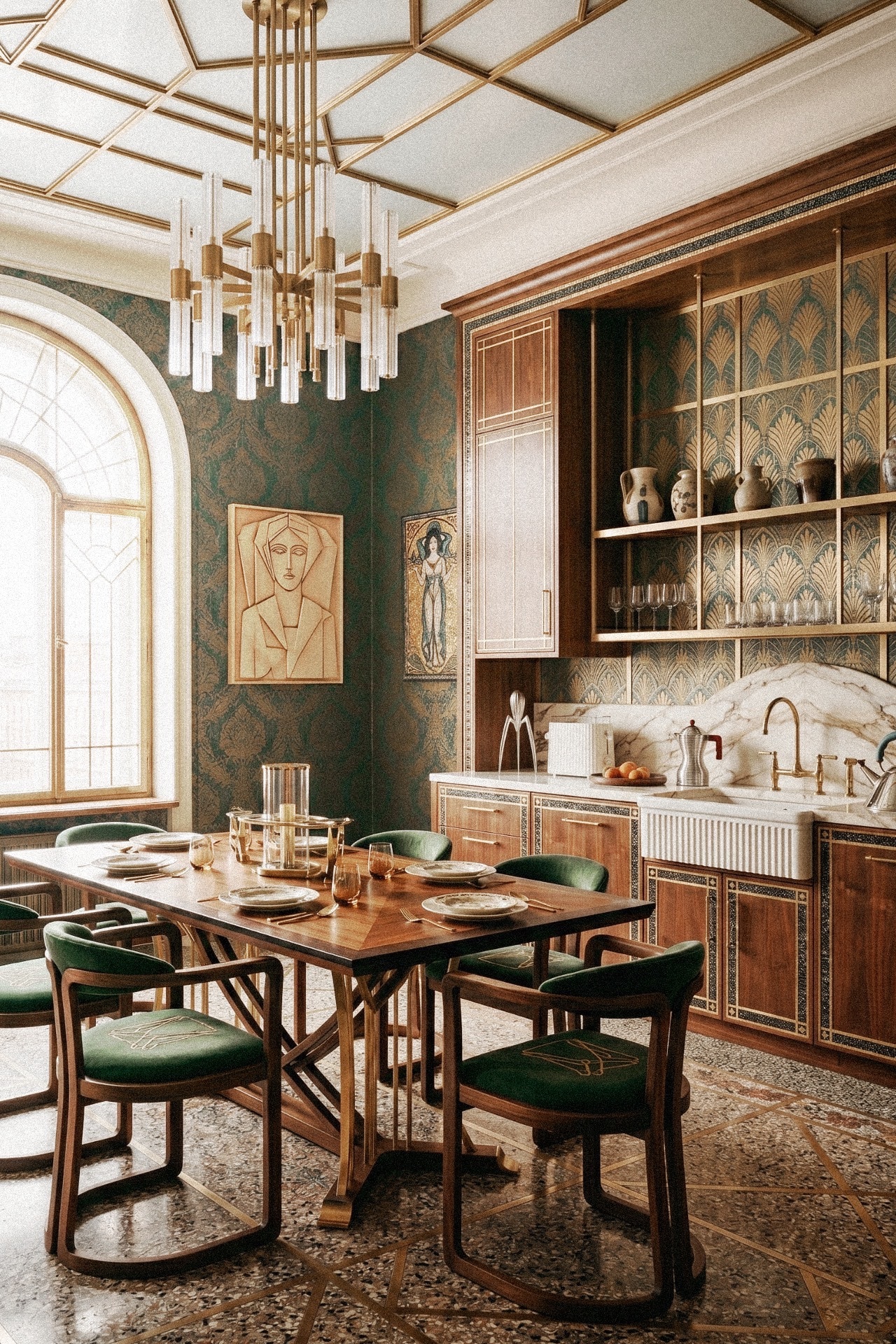
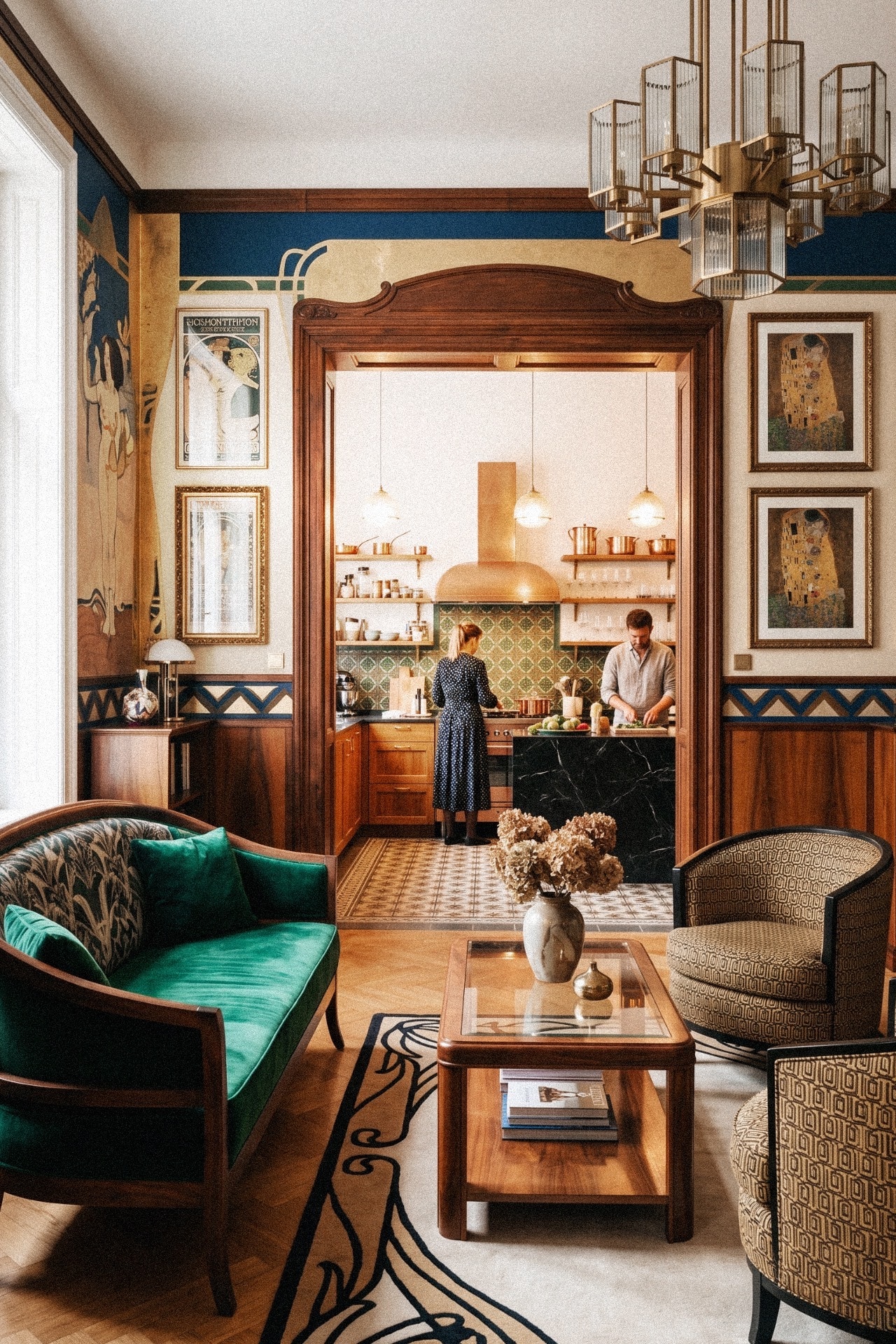
This style comes from the early 1900s when Austrian artists broke away from traditional academic art. It is a very elegant direction that sits exactly between the flowing lines of Art Nouveau and the strict geometry of modern design.
The layout is formal and symmetrical. Rooms are arranged with high precision, where every chair and table corresponds to a line on the wall or a pattern on the floor. It feels like a gallery where everything has an exact place.
Dark wood, especially ebony or blackened oak, is combined with shiny brass and geometric inlay work. The craftsmanship is of the highest quality, with furniture showing square lines and repeating checked patterns.
The color palette is sophisticated, using white and black as a base, combined with rich tones like emerald green or deep red in small amounts. Geometric gold details appear on light fixtures and cabinet handles, adding a controlled sense of luxury.
Materials and textures: blackened ebony, polished brass, geometric marquetry, smooth marble, bentwood, fine porcelain, cut glass
Spatial layout and form: strict axial symmetry, tall vertical lines, geometric repeating grids, square furniture profiles, integrated wall panels, formal seating plans, high-standing cabinets
Colour palette: Hoffmann black, stark cream, polished brass gold, deep emerald, dark plum, graphite grey, pure white
Details and decor: square checkered patterns, brass dome lamps, geometric glass vases, stylized leaf graphics, bentwood chairs, monochrome ceramic containers, abstract borders on walls
European home interior styles – conclusions
We have now looked through the different ways people across the continent choose to build their rooms. It is clear that there is no single right answer, only solutions that make sense for the local conditions, material supply, culture and heritage.
When you start to plan your own space, it is useful to choose one logic and stick with it. Mixing too many different ideas usually leads to a home that feels busy, which is not comfortable for the head after a long day of work.
You do not need to buy many expensive objects to make a room function well; you just need to ensure that the things you have are placed in a way that allows the people (and cats) to move freely.
In the end, a good room is simply a space that does not bother you. It should have a floor that is easy to clean, a chair that supports the back properly, and enough light so you can read your book without straining the eyes. We hope this very simple and short overview gives you some steady ground when you decide how to arrange your own four walls.
 Ohävn
Ohävn 